
"Innovations don't happen in the conference room"
July 08, 2026 | Reading time: 7 minutes
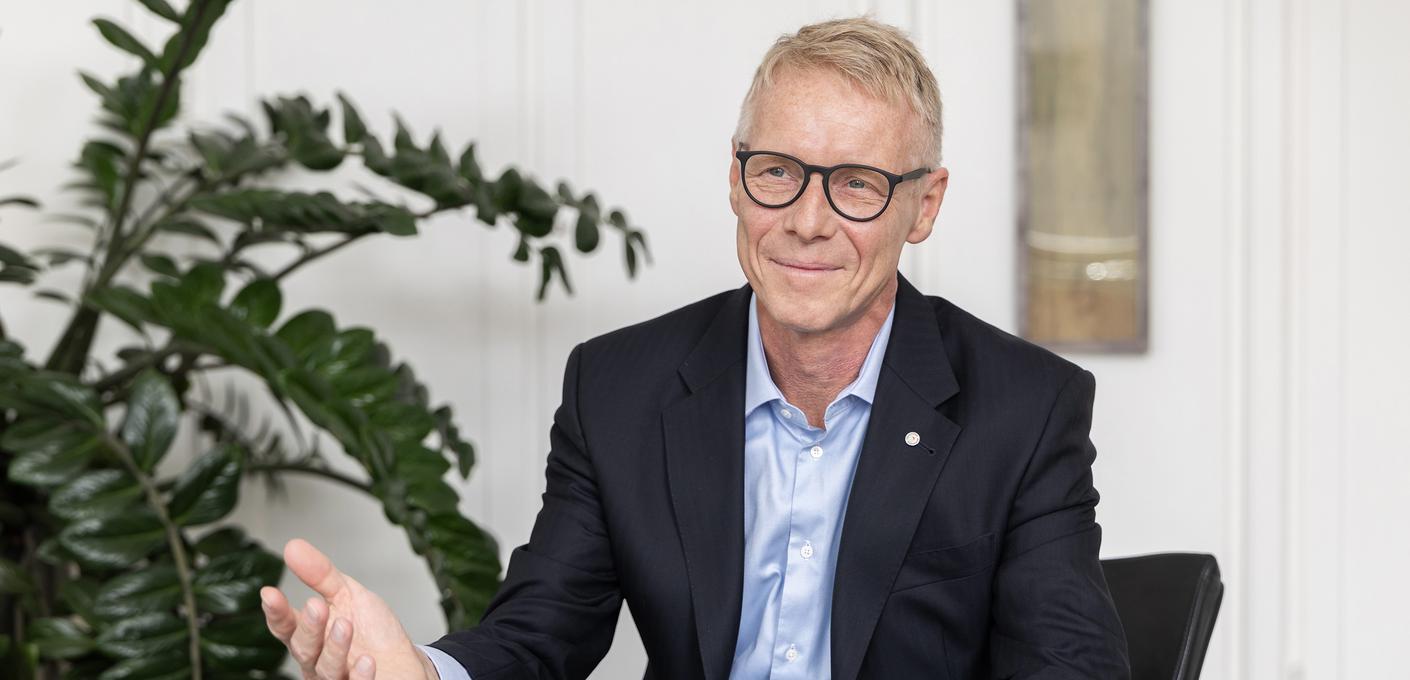
How Benedikt Ritterbach, Managing Director of Salzgitter Mannesmann Forschung GmbH (SZMF), is aligning Salzgitter research to support the transformation to low-CO₂ steel production.
Mr. Ritterbach, Salzgitter AG is in the midst of transitioning to low-carbon steel production. What is a central strategic task of research? What strategic role does research play in this?
The risk management of this transformation in terms of materials technology represents a central task. The new production route changes parameters in the manufacturing process. We have to design the processes in such a way that quality, delivery capability and cost competitiveness are ensured also under the new conditions. For our customers, this change must function reliably and as smoothly as possible.
A broad development spectrum: How do you decide which topics take the highest priority?
Most of our work focuses on specific market and customer-driven requirements. That is where our focus lies. We conduct application-oriented industrial R&D. That means: We develop solutions for specific market requirements, for example in the automotive industry. At the same time, we deliberately leave room for our own ideas. Both paths are important, but must ultimately be measured by their added value.
What criteria do you use to decide whether an idea should be pursued further or discontinued?
We have a multi-stage process in place. An idea has to prove itself anew at every stage. New ideas are initially evaluated in terms of feasibility and then validated: which topics are pursued further, which are implemented, and which are discontinued.
We evaluate according to criteria such as customer benefit, time to market and, of course, commercial success. To this end, we have established a way of working with small, agile venture teams, with which we examine high-risk pre-development projects in a structured manner. These teams scrutinize the business case from the ground up: Is there a market and specific customer requirements? Is the project technologically feasible and economically scalable? What are the costs of conversion and product launch? What does the economic efficiency look like? What benefits does the idea offer? How does it contribute to the Group strategy? Are there risks and knock-out criteria?
When do you pull the plug?
If an idea does not pass this reality check, we abandon it. Only what proves to be technically feasible, economically viable and strategically correct is greenlighted for the next steps, until the operational unit finally takes on the developed concept, industrializes it and brings it to market. It is very important to involve the relevant operational unit as early as possible in order to avoid ivory tower research.
Salzgitter AG is active in a broad network of universities and institutes. What strategic role do these partnerships play beyond solving development issues?
Our networks fulfill three central functions: First of all, they provide us with access to basic research. Universities and research institutes provide us with impetus and methodological expertise, which we then transfer internally to applications and the market in a targeted manner. Secondly, they help us to further develop our methods and skills in a targeted manner. Our collaboration with the Vienna University of Technology is a good example of this, where one of the world's leading materials simulation programs is being developed for us and helping us to optimize our own processes with their models.
Innovation requires creativity. How do you create the space needed for this?
Creativity does not come on instruction and only rarely in conference rooms. That is why we are specifically creating different framework conditions. At both SZMF locations, we have trained so-called innovation tutors with a whole set of creativity methods that are suitable for us. We have also deliberately created spaces designed to foster creativity, which are very different from the usual working environment. Such methods and changes of perspective help to break through habits of thought and develop new ideas. But that alone is not enough. Creative freedom also needs structure. That is why we work on a project-related and very systematic basis, for example in the venture projects already mentioned. In this way, we are creating space for new approaches, while at the same time ensuring that only ideas with genuine potential are taken forward for further development.
Transformation, research and development – all this costs a lot of money, while steel prices on the global market are falling. What can the SZMF achieve in this field of tension?
The economic reality is indeed harsh. A kilo of high-quality, hot-dip galvanized steel, which takes many weeks to produce, often costs less than half a liter of mineral water. We cannot escape this global price pressure. But we can ensure that we are not differentiating ourselves on the markets on price alone. We score points with our closeness to customers and our in-depth understanding of their requirements and processes, but also with our ability to develop highly specialized steel grades for niche markets that are of less interest to larger competitors. Solutions that are technically brilliant but, in the eyes of our customers, not price-competitive do not help anyone. Our aim is to create decisive added value through intelligent, market- and customer-oriented developments that extend beyond the mere price per ton.
About the person
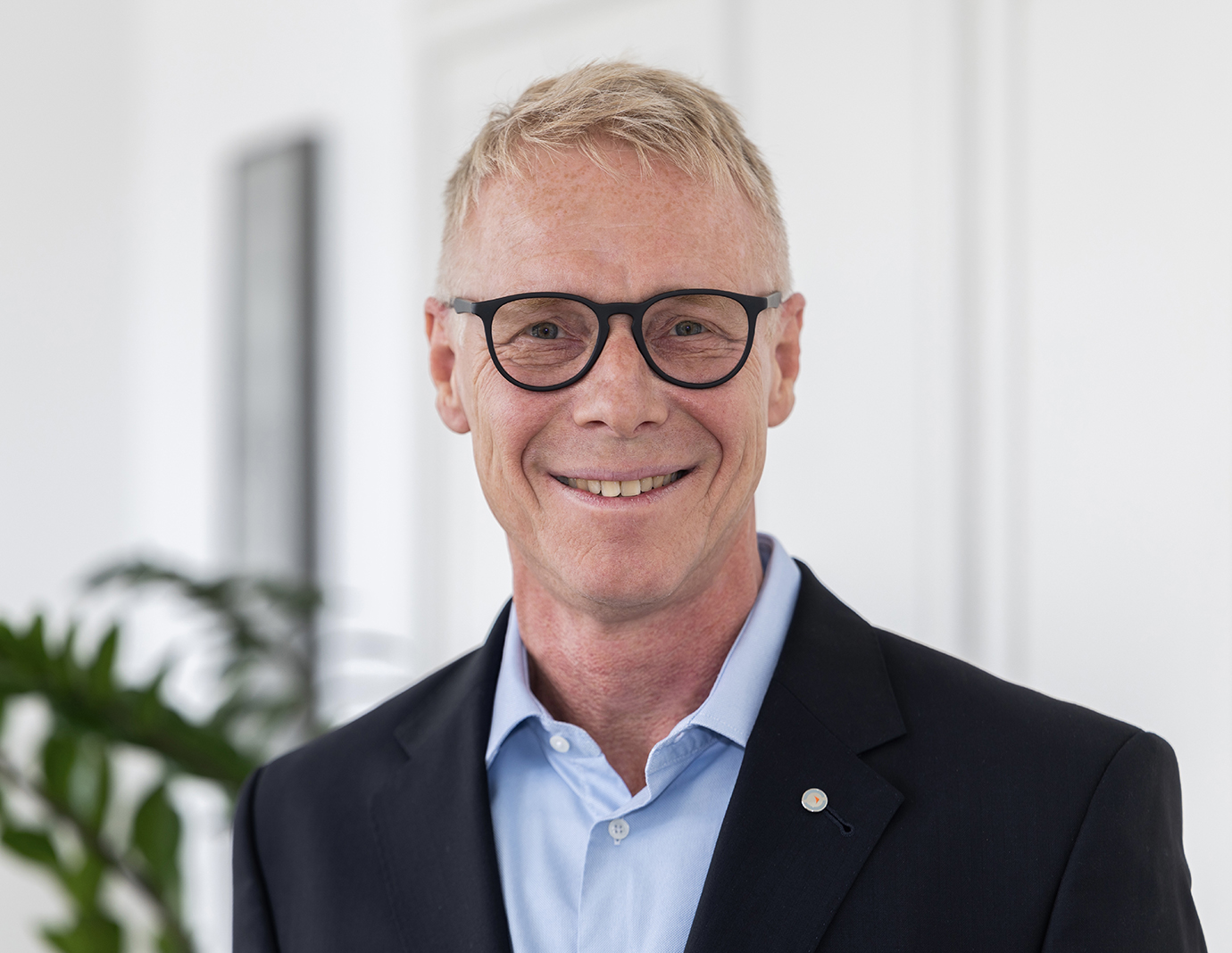
Dr.-Ing. Benedikt Ritterbach studied metallurgy and materials engineering at RWTH Aachen University and began his professional career in 1992 in the cold rolling mill of what is now Salzgitter Flachstahl GmbH. Having initially held positions as a process engineer and plant manager, he assumed responsibility for the entire cold rolling mill and surface finishing operations as operations director in 2002. Since 2009, Ritterbach has been Managing Director of Salzgitter Mannesmann Forschung GmbH and is responsible for research and development within Salzgitter AG.
Discover similar posts
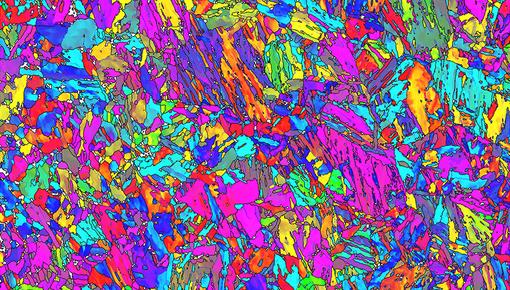
High-tech research exploring steel’s innermost core
Uncovering the secrets of steel on a daily basis: in Salzgitter and Duisburg, the experts at Salzgitter Mannesmann Forschung GmbH (SZMF) analyze the microstructure of the material.
Read post
"You can always do just a little bit better"
Optimizing in-house processes, scaling solutions and listening as closely as possible to customers: How the new "Operational Excellence" unit at subsidiary Salzgitter Flachstahl GmbH is driving Salzgitter AG's performance forward.
Read postThe address of this article has been copied to your clipboard.