
Sourcing raw materials from rusty car bodies
March 03, 2026 | Reading time: 14 minutes
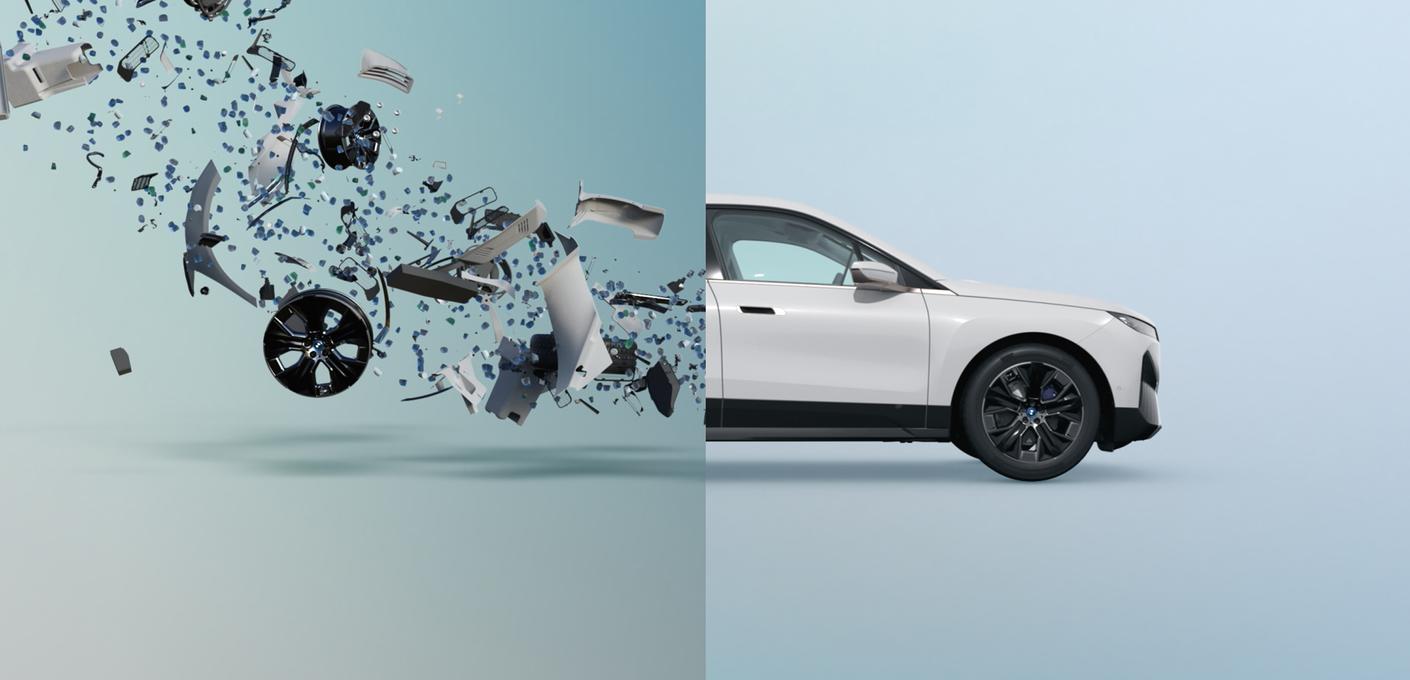
A climate-friendly cycle: Engaging in the Car2Car funding project, industry and science worked together on new solutions geared to achieving a genuine circular economy in automotive engineering – under the auspices of the BMW Group. Salzgitter Mannesmann Forschung was also involved and researched how to return steel to the cycle even more efficiently – thereby reducing CO₂ emissions in the process.

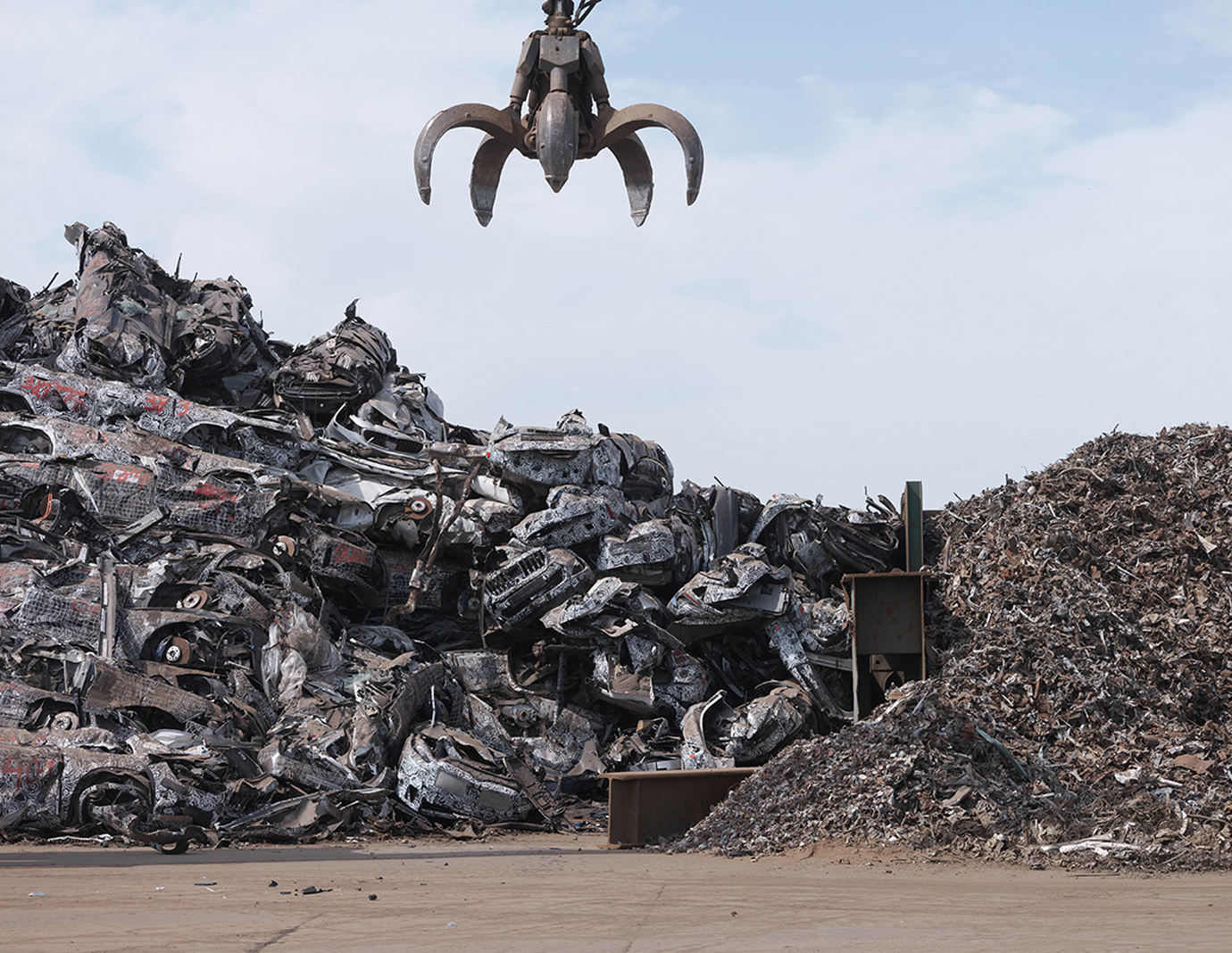
It's freezing cold on this January morning. A clear sky stretches above the steelworks site in Salzgitter. At the DEUMU (Deutsche Erz- und Metall-Union GmbH) scrap yard, a Salzgitter Group subsidiary, the first rays of sunshine of the day glint over the mountains of scrap metal. A truck roars as it unloads a cargo consisting of old discarded bicycles, decrepit washing machines, dented car bodies and shiny cubes of production waste. Clouds of dust swirl through the air. Scrap handling excavators reach deep into the scrap piles and load scrap metal parts onto the conveyor belt of the shredder plant. Moments later, the volume level rises again: The shredder breaks down the scrap into reusable fractions so that it can later be used to produce CO2 reduced steel.
In future, shredders like these will do far more than just shred. Designed to sort and separate materials intelligently, they will lay the foundation for an even more efficient circular economy in automotive manufacturing.
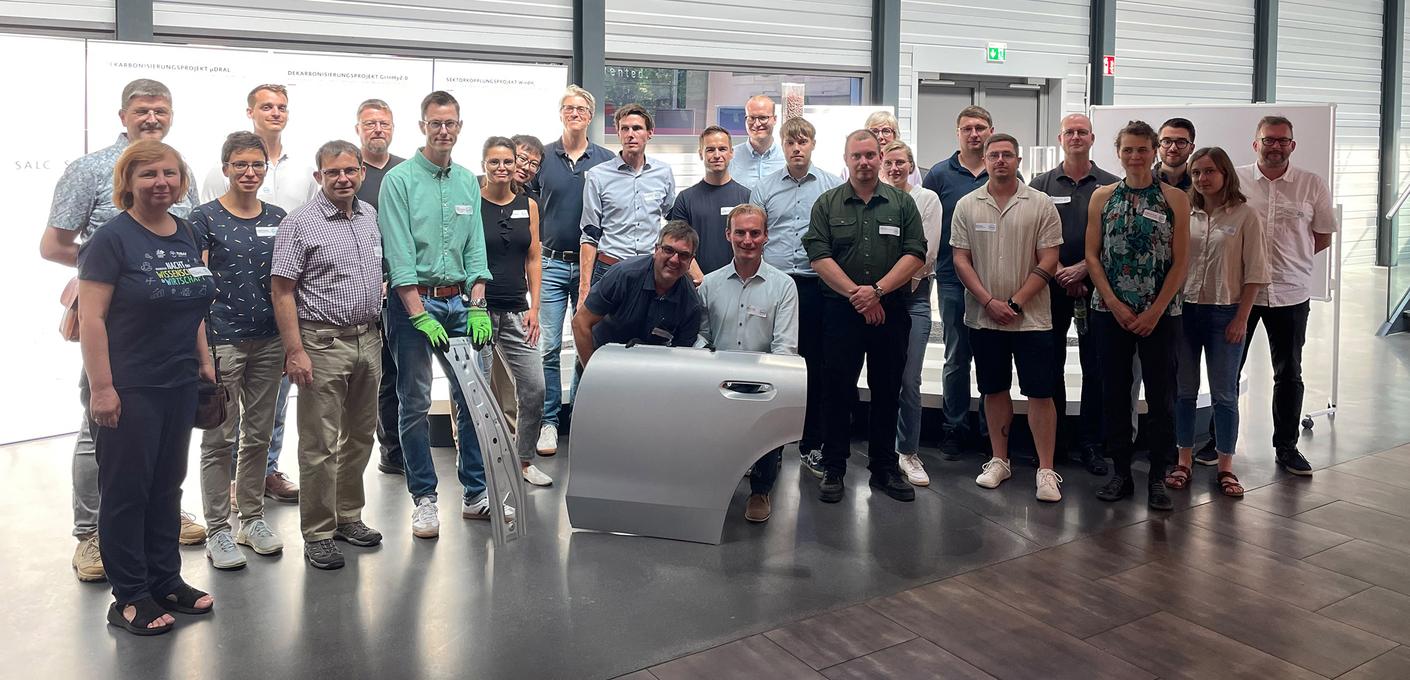
This is precisely where the Car2Car research project, funded by the German Federal Ministry for Economic Affairs and Energy, enters the picture, focusing on the recycling of steel, aluminum, glass, copper and plastic from end-of-life vehicles. Joining forces with other partners from industry and science, BMW and Salzgitter AG wanted to find out how the recyclable materials from end-of-life vehicles can be put to much better use for the manufacturing of new cars as has been previously the case.
From climate targets to the circular economy
"The transformation of industry towards a circular economy is unavoidable," as Hilke Schaer, Project Manager Car2Car at BMW Group emphasizes. The car manufacturer, which has assumed the lead role in the project, is committed to the Paris Climate Agreement and aims to reduce its CO₂e emissions by 90 percent by 2050 at the latest compared to 2019. The Munich-based company has made the circular economy its strategic focus. "In order to achieve the climate targets, we are looking at the entire value creation process, and end-of-life vehicles are a source of secondary raw materials for the BMW Group. In pursuing the Car2Car project, we want to promote the return of end-of-life vehicles to the raw materials cycle," says Schaer.
Salzgitter AG also regards the project as a crucial building block on the road to a climate-friendly future. With its SALCOS® (Salzgitter Low CO2 Steelmaking) transformation program, the company is pursuing the goal of reducing CO2 emissions by more than 95 percent by the mid-2030s. To this end, traditional blast furnaces are being replaced by new technologies such as direct reduction. The direct reduction plant and an electric arc furnace are the central components of this new route and require one thing above all else in addition to directly reduced iron: high-quality steel scrap as a secondary raw material.
Large-scale test: 400 end-of-life vehicles undergoing the recycling process
"This closes the circle to Car2Car," says Matthias Schneider, who is supporting the project for Salzgitter Mannesmann Forschung. "Scrap has always featured as a strategic raw material for steel production. Also in the conventional blast furnace and converter process scrap is required for cooling – with the recyclate rate usually standing at around 20 percent.
The quality of the scrap, however, is one limiting factor in the production of certain steel grades. The better the quality of the scrap, the higher the volume of the resulting recyclate can be. Today, steel is already being melted from pure steel scrap in electric arc furnaces and processed into new steel products such as beams. But what we are also working on in the context of Car2Car is to enable to achieve specific grades, such as those required in automotive engineering. Car2Car has provided us with valuable insights into the use of post-consumer steel scrap and its suitability for producing steel products typically used in automotive manufacturing once again.”
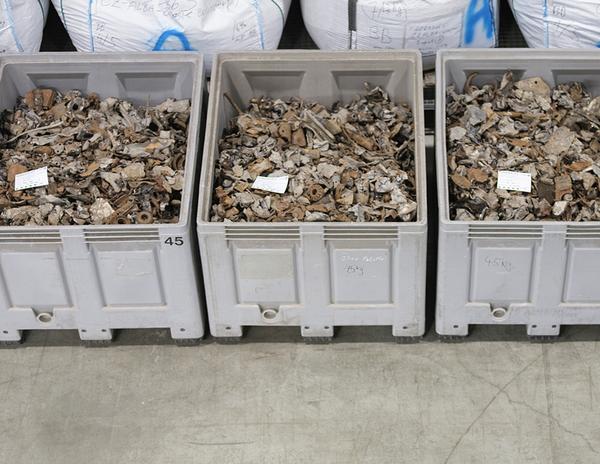
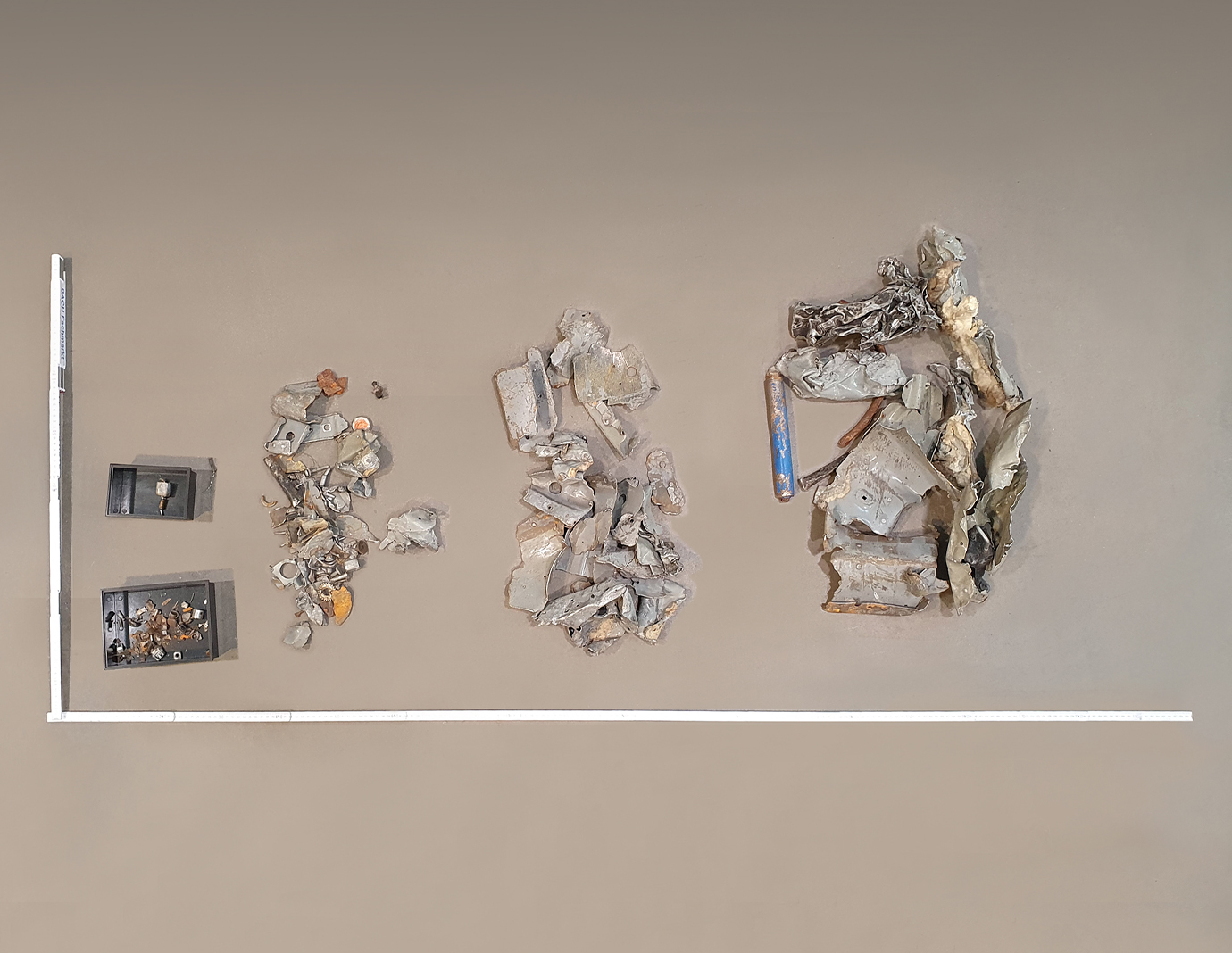
The core of the project was a large-scale trial in which more than 400 used vehicles from the BMW Group portfolio were run through the entire recycling process after only minimal dismantling. The aim: to determine a so-called "Car2Car quota". This describes which proportion in terms of weight in end-of-life vehicles can be processed in such a way that it meets the high quality requirements for proportionate use in a new vehicle.
There was no shortage of surprises, and one of the biggest concerned steel itself: Experts had expected to have to deploy complex sensor technology to filter out unwanted foreign substances such as copper from the shredded material. But the project delivered quite the very opposite results. "We were able to prove that we can process recycled material suitable for automotive use in flat steel production without sensor technologies," as Schaer reports. "Instead, we have already been able to use mechanical processes such as magnetic separation and classification to sufficiently reduce the share of critical elements."
Steel recycling as the key to low-CO2 production
The results are highly promising. "We have been able to prove that potentially more than 50 percent of materials from end-of-life vehicles can be reprocessed for use in vehicle manufacturing by way of additional process steps," says Schaer. "And only the metals steel, aluminum and copper are achieving this." The challenges are greater for glass and plastics, where economic efficiency is the main factor limiting the potential.
"In a research project, we can invest significantly more time and effort in analyses," as Salzgitter researcher Schneider relates. "In real life, a truck full of scrap drives up – there might be two fridges and lots of old bicycles in there, so nobody can conduct 20 laboratory analyses per batch. The project shows what is possible. The trick now will be to translate the findings into robust, economic processes."
The focus on steel is by no means a coincidence. "As steel often accounts for up to 50 percent of the vehicle mass involved, reducing the steel footprint has a significant impact on the supply chain emissions balance," reports Schaer. Each additional percentage point of recycled content saves energy and CO2 for the product manufactured in this way, compared with production from primary raw materials. The findings from Car2Car confirm Salzgitter AG's chosen course to low-CO2 steel production – also known as green steel – and provide valuable data for future scrap processing. While industrial scrap from production prior to use was mainly involved in the past, the availability of recyclate can be significantly increased by processing post-consumer material. At the same time, downcycling is curbed if the secondary materials are reused at approximately the same quality level. The extent to which scrap steel from end-of-life vehicles will be used for steel production in the future will depend, among other factors, on the demand for steel and the availability of other scrap grades.
Digital product passports for greater transparency
In order for the tried-and-tested processes to develop towards industrial standards, transparency is required for end-of-life vehicle recycling in addition to technology. "The opportunity to develop new business models arises where cooperation between partners is supported seamlessly and transparently by digital platforms," says Schaer. In future, digital product passports could clearly indicate which materials are used in a vehicle and in what quality they will be available at the end of their life cycle. On this basis, material flows can be reliably planned – and high-quality secondary raw materials can be directed to where they will have the greatest impact.

![[Translate to Englisch:] Matthias Schneider, Salzgitter Mannesmann Forschung GmbH, vor heller Wand mit Pflanzendekoration, trägt ein weißes Hemd und BrilleMatthias Schneider, Salzgitter Mannesmann Forschung GmbH, in front of a light wall with plant decoration, wearing a white shirt and glasses.](/fileadmin/stil-magazine/_processed_/f/0/csm_Portrait_Matthias_Schneider_1380x1068_eb285490fd.jpg "[Translate to Englisch:] Matthias Schneider, Salzgitter Mannesmann Forschung GmbH, vor heller Wand mit Pflanzendekoration, trägt ein weißes Hemd und BrilleMatthias Schneider, Salzgitter Mannesmann Forschung GmbH, in front of a light wall with plant decoration, wearing a white shirt and glasses.")
Moreover, reliable partnerships and stable political framework conditions also need to be in place. "Companies can't plan when the direction of regulations changes every few years," emphasizes Schneider. Reliability counts crucially for the climate-friendly future of the industry, as investments in systems and processes are high. If fundamental objectives and boundary conditions shift, those who have invested early in climate neutrality may end up being penalized.
It is not yet possible to put an exact figure on the share of end-of-life vehicles in the supply of raw materials in ten years' time. But the direction is clear. "We are convinced that the link between recycling and new production will become increasingly self-evident," says Schaer. And so, in future, the chomping crunch of old bodywork in the scrapyard in Salzgitter could no longer mean the end of a car's life, but the beginning of its next one - as a new vehicle produced with low CO2 steel. Thanks to innovative technology, digital platforms and clever collaborations, scrapyards are becoming a source of new automotive added value.
Discover similar posts
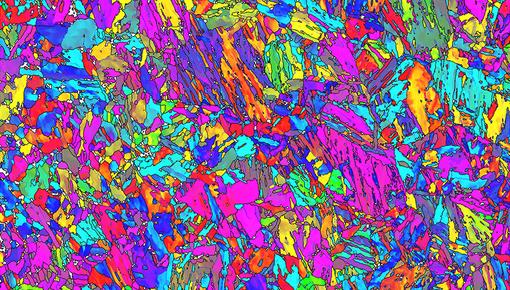
High-tech research exploring steel’s innermost core
Uncovering the secrets of steel on a daily basis: in Salzgitter and Duisburg, the experts at Salzgitter Mannesmann Forschung GmbH (SZMF) analyze the microstructure of the material.
Read post
"You can always do just a little bit better"
Optimizing in-house processes, scaling solutions and listening as closely as possible to customers: How the new "Operational Excellence" unit at subsidiary Salzgitter Flachstahl GmbH is driving Salzgitter AG's performance forward.
Read postThe address of this article has been copied to your clipboard.