
PET from Hamburg for the global markets
October 05, 2026 | Reading time: 9 minutes
The KHS Group, a Salzgitter Group subsidiary, is expanding production of its successful PET coating systems in Hamburg. A clear commitment to Germany as a business location.
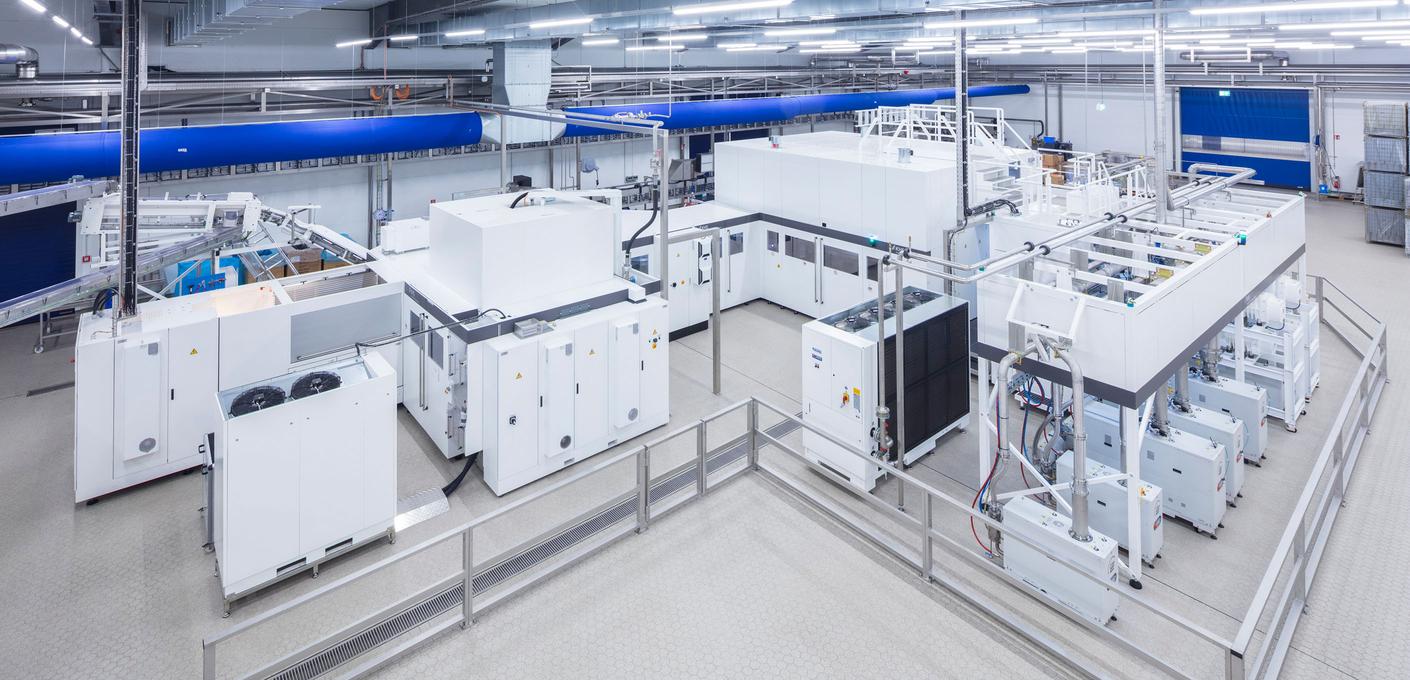
If demand for your own product quadruples, you could sit back and relax. Or, like the KHS Group, take a decisive initiative: The Dortmund-based company, which specializes in bottling and packaging, is now investing more than 11 million euros in expanding its Hamburg facility. A new production center for Plasmax PET coating technology is being put in place in the Hanseatic city. In the future, all the areas of coating technology—from development and manufacturing to assembly and sales—will be consolidated under one single roof there.
Plasmax: Glass Coating for Longer Shelf Life
Whether it's fruit juice, beer, wine, a soft drink, or sauces: The barrier coating protects sensitive products from oxygen pickup and preserves the carbonation, ensuring that beverages stay fresh and preserve their flavor and quality for longer. At the same time, this special type of coating combines the protective properties of glass with the weight and logistics advantages of PET. For bottlers, this means longer production runs, more stable supply chains, and less waste due to expired beverages. Recycling is another advantage. In line with the standard process, the glass coating is removed from the PET wall by way of hot lye. Unlike other composite materials, this material remains pure PET and is suitable for complete bottle-to-bottle recycling. The coating can also be applied to 100% rPET, i.e., recycled material.
From blanks to finished bottles
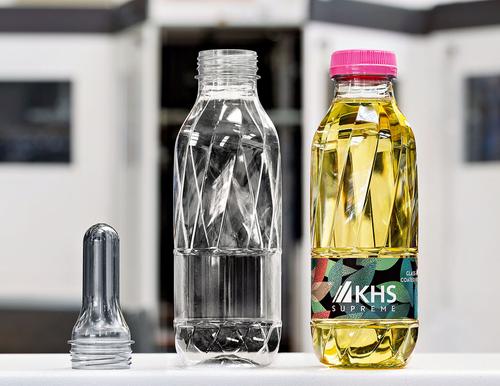
In a KHS InnoPET FreshSafe Quadblock, a PET bottle goes through four steps on an integrated line:
1. Extension Blow Molding
The finished PET bottle is blown from a small plastic blank—known as a preform—and shaped into its final form.
2. Coating
In the Plasmax process, a wafer-thin layer of glass is applied to the inside of the bottle. It protects the contents from oxygen and preserves the carbonation.
3. Labeling:
The coated bottle is labeled while it is dry—an advantage over other processes in which condensation or rinse water makes labeling more difficult.
4. Filling and Sealing
The finished, labeled bottle is filled and sealed. This is followed by packaging and palletizing.

Growing Demand, Increased Capacity
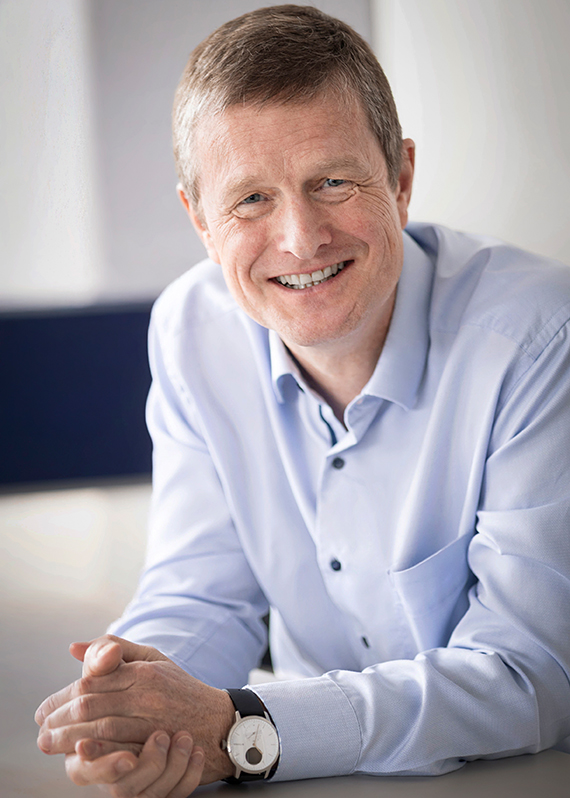
For KHS, this is precisely where the market opportunities will be tapped. Many bottlers are looking for packaging solutions that combine product protection with recyclability. This is especially true for small, very lightweight PET bottles used for carbonated soft drinks. The expansion in Hamburg is intended to enable meeting this demand more rapidly in the future. For customers, the main focus is on shorter distances, faster processes, and greater availability. At the same time, KHS is continuously refining the latest generation of Plasmax machines in order to achieve higher performance, even greater efficiency, as well as more compact machine designs.
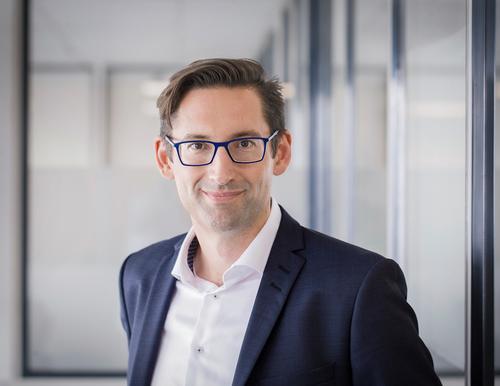
© Frank Reinhold
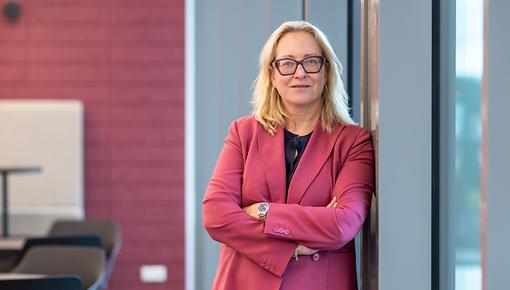
Why is Plasmax so strategically important for the KHS Group?
Plasmax is a key technology for us because it bundles several developments: the desire for better product protection, the demand for recyclable packaging, and the demand for high-performance solutions for international markets. That is why our processes and technologies have become significantly more important in recent years. Incoming orders for our machines are four times as high as they were five years ago.
Why is KHS investing in its Hamburg location right now?
Because this is where expertise in PET and coating technology is concentrated, and because demand necessitates the next expansion phase. The new building will be bringing development, product support, assembly, and commissioning even closer together. It is not just an expansion of our facilities, however, but a strategic investment in a faster pace, collaboration, and the industrial expertise at our Hamburg site, which has been our center for PET for more than 50 years.
What specific changes will this expansion entail for customers?
We want to deliver faster, and deliver more machines, as well as complete filling lines. For customers, this means, above all, greater availability, shorter lead times, and technology that improves product protection, extends shelf life, while at the same time allowing for less material being used. Here is a quick example: Until recently, one of our customers needed a 22-gram PET bottle to achieve a shelf life of 80 days. With the latest generation of Plasmax, 14 grams is all you need, and the shelf life is twice as long. This reduces plastic use by up to one-third and demonstrates how sustainable our process is on multiple levels.
Discover similar posts
Back to black: Salzgitter Group stabilizes earnings
A weak economy, high energy prices, and global overcapacity: In this interview, CFO Birgit Potrafki explains how Salzgitter AG overcame adverse conditions to deliver stable earnings in 2025, the role played by the P28 earnings improvement program and the exchangeable bond, and why she is cautiously optimistic about the new financial year.
Read interview
"You can always do just a little bit better"
Optimizing in-house processes, scaling solutions and listening as closely as possible to customers: How the new "Operational Excellence" unit at subsidiary Salzgitter Flachstahl GmbH is driving Salzgitter AG's performance forward.
Read postThe address of this article has been copied to your clipboard.