
Setting the course to the future in Lower Saxony
March 03, 2026 | Reading time: 11 minutes
Why Benedikt Hüppe, Managing Director of the Unternehmerverbände Niedersachsen (UVN) (Lower Saxony Business Associations), is strongly convinced of the adaptability, flexibility and sustainable future viability of Lower Saxony as a business location. And what he is demanding from policy makers.
Mr. Hüppe, Lower Saxony is in the midst of the greatest industrial transformation in decades: Steel, chemicals, automotive – many traditional industries with key locations in the region are under great pressure from competition and change. Are you worried about the economic strength of the location?
We should not be worrying, as we are coming from a position of strength. But we are looking at the situation with a good deal of skepticism. Energy-intensive key industries in particular, such as the steel and chemical sectors, have recently come under pressure.
Why are you feeling so upbeat?
Historically speaking, for example, we have accomplished the transition from a traditional agricultural to a genuine industrial location. Naturally, we still grow grain on our extensive agricultural areas – but we are now also harvesting wind power there, to stay in the picture.
In addition, we have an above-average industrial core delivering around 30 percent gross value added and sustainable industries, including a functioning critical infrastructure. The defense industry is now also part of this industrial core again. A genuine cluster is currently developing here, which we as UVN have initiated together with the state government and now comprises more than 300 companies, including Salzgitter AG.
This demonstrates the fact that our industry is capable of transforming and renewing itself again and again. SALCOS® is another salient example – the transformation program by which Salzgitter AG is making an exemplary contribution to climate protection and the reduction of emissions. As you can see: Companies in Lower Saxony have clearly defined plans for the future. They are committed to staying here where they are instead of thinking about relocating.
And beyond the steel industry?
I see the chemical industry, for example, making a similar effort. Or the automotive industry, which is experimenting with hydrogen technology and autonomous driving or working on innovative battery cell production. Many companies are well on their way. However, they need competitive political framework conditions. And when I look at what we have in place, I would tend to award a grade of four.
Aren't you making it a bit easy for yourself by calling for the government to take action?
No. Companies like Salzgitter AG in particular need long-term reliability in view of their tremendously complex investment decisions. It takes 30 or 40 years for huge plants such as direct reduction plants and electric arc furnaces to be written off. Without reliable guard rails, you risk economic hara-kiri – which is not an option for a shareholder-driven company. What’s more, we urgently need the loud and clear voice of national politics to be heard at the EU as well.
Where do policymakers need to act most urgently?
Tackling our energy prices – if we do not come to terms with this issue, the transformation in these sectors will not succeed. Then other sectors will push forward. But I doubt whether they can achieve a similarly high level of value creation with comparable jobs.
Is state policy taking sufficient action to counteract this?
Lower Saxony is at least the only federal state with a uniform position on industrial electricity prices. Unfortunately, despite many announcements, such a position still does not exist today and it is to be feared that only a few will benefit from it. It is obvious that federal policy is out of its depth here. The same applies to the hydrogen supply. There are just as many unanswered questions in this respect. When will the infrastructure be ready? Who will produce the hydrogen and when? How can we achieve all this at competitive prices?
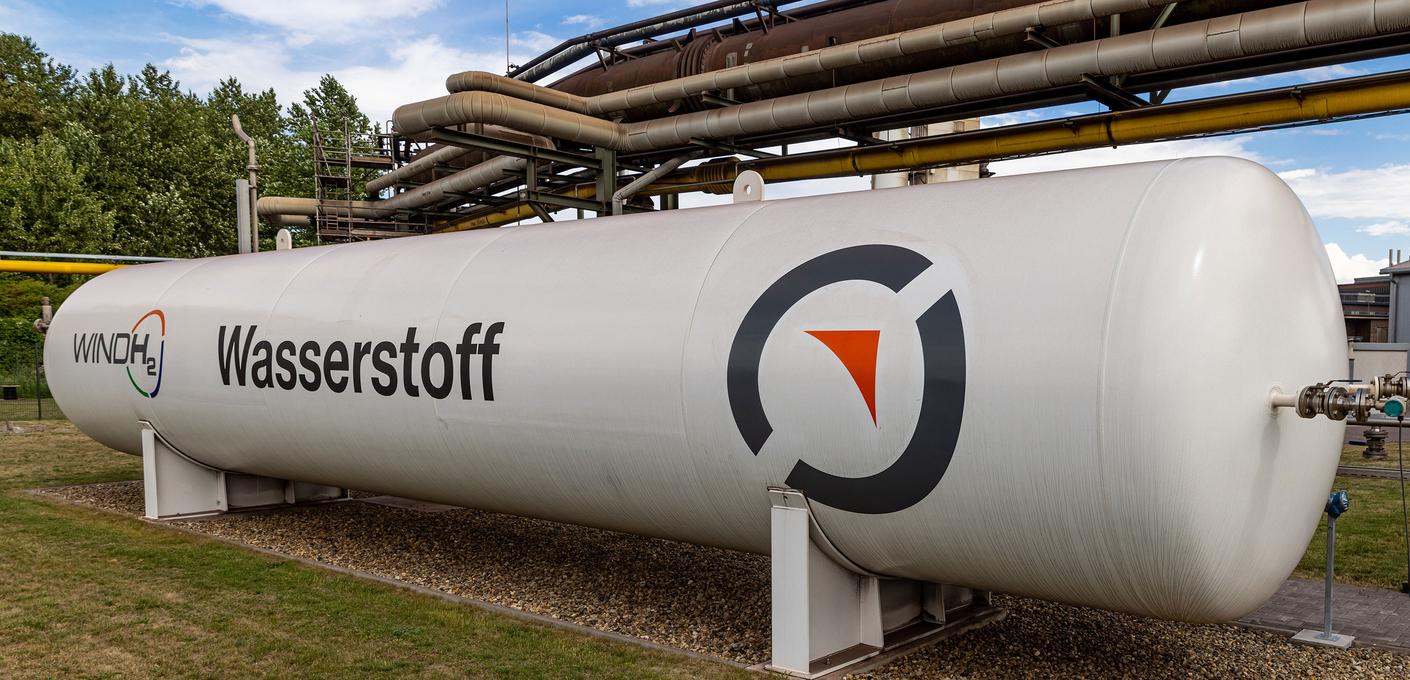
Minister President Olaf Lies is convinced: Lower Saxony is capable of becoming the number one hydrogen location. Is this realistic from your viewpoint as well?
If any federal state in Germany can become a hydrogen state, it has to be Lower Saxony. We have the greatest potential – the coast with the right infrastructure for import ports, major cavern storage facilities and industries that can handle hydrogen. For such key infrastructural decisions as the future shape of our energy supply, I would simply like politicians to provide a framework that will enable planning over the longer term. After all, we operate here at the core of our industrial value creation. To put it mildly, this is grossly negligent because we are sawing off the branch we are sitting on.
Where will the money for the comprehensive green transformation of our infrastructure be coming from?
There are enough investors, such as insurance companies, who are not interested in the highest possible short-term returns, but in stable long-term returns instead. In addition, the state's billion-euro infrastructure package can act as a major lever for initiating a comprehensive green transformation. Naturally, low-CO2 products are often more expensive than conventionally produced ones. But if green steel is prioritized in tenders, for example, economies of scale could quickly take effect. And a sustainable future viable market is developing that is not dependent on subsidies.
In addition to a sustainable energy supply, what else is needed to get there?
Fair competition: Overcapacities from China are pushing into the markets, with some products being sold at prices that are on par with production costs in Europe. This does not work. I am also increasingly concerned that major partners such as the USA are abandoning rules-based competition – and are relying on the law of the jungle instead of WTO rules. Europe must draw closer together and leverage its market power.
How?
For example, through emissions trading. With a CO2 price that can also have a prohibitive effect. If we want to be climate-neutral at some point, CO2 must be so expensive that avoiding it always pays off. Until then, we need to build a bridge to ensure that the transformation phase up to 2050 is clean and safe – meaning that first movers are not penalized, but benefit from market advantages.
With solar energy we have already seen that being a pioneer in the use of innovative technologies can lead to economic failure...
That's right – the technology expertise and added value in this area have long since migrated out of Germany. Which is why this should not happen again with wind energy – we are still the number one location in Lower Saxony – or with hydrogen.
How do you intend to prevent this?
By not only installing the wind turbines here, but also by developing, building and recycling them in Lower Saxony. The entire life cycle of this energy generation must take place here instead of us importing plants from third countries, which we may even be subsidizing. That is why I regard it as so important that we build and maintain closed value chains in Europe, Germany and Lower Saxony. This is the only way to increase productivity and added value. We are still running too close to each other in this respect.

What are you doing about this as UVN?
Together with the state government of Lower Saxony, we are in the process of positioning ourselves better in Brussels, namely Lower Saxony as a location, to benefit from the next funding period in 2027. The aim being that more funds flow from Brussels to Lower Saxony. But we also need make considerable improvements in distributing these funds.
Where are the problems at the moment?
We now have over 2,000 funding guidelines in Lower Saxony, a jungle that companies have to fight their way through. We need fewer, but broader and more extensive funding guidelines. We should not be distributing the money with a watering can but must think in terms of topical clusters and invest in promising ecosystems with which Lower Saxony is associated worldwide. Whether this is mobility, hydrogen, the defense industry, health or agriculture – one thing is for certain: there is no need to worry.
Related topics
![[Translate to Englisch:]](/fileadmin/stil-magazine/_processed_/c/7/csm_Header_Rohrinfrastruktur_900x510_a66f68b4b8.webp "[Translate to Englisch:]")
The invisible grid of the energy transition
A significant share of Germany's ongoing industrial transformation is taking place underground: The conversion, expansion and new construction of the pipeline networks for thermal energy, water and hydrogen is the largest and probably most diffuse construction site in the entire country. A Herculean task in which steel pipes are putting down the technological foundation.
Read post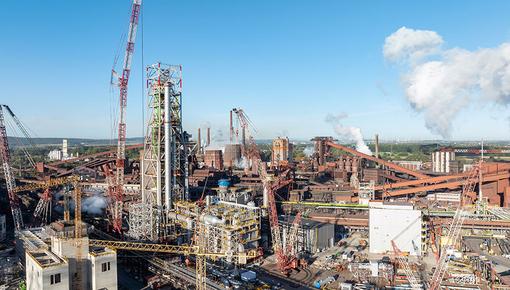
On the 1.5 °C pathway
Salzgitter AG is in the midst of the largest transformation in its history: This is how SALCOS® is driving the decarbonization of the steel industry.
Read post
Modular principle
Cutting, rolling, welding: Salzgitter AG is expanding its defense business with a modular system and a new, group-wide sales organization.
Read postThe address of this article has been copied to your clipboard.