
The invisible grid of the energy transition
![[Translate to Englisch:]](/fileadmin/stil-magazine/_processed_/9/c/csm_Header_Rohrinfrastruktur_2820x1360_ca0f467da3.webp "[Translate to Englisch:]")
March 03, 2026 | Reading time: 13 minutes
A significant share of Germany's ongoing industrial transformation is taking place underground: The conversion, expansion and new construction of the pipeline networks for thermal energy, water and hydrogen is the largest and probably most diffuse construction site in the entire country. A Herculean task in which steel pipes are putting down the technological foundation.
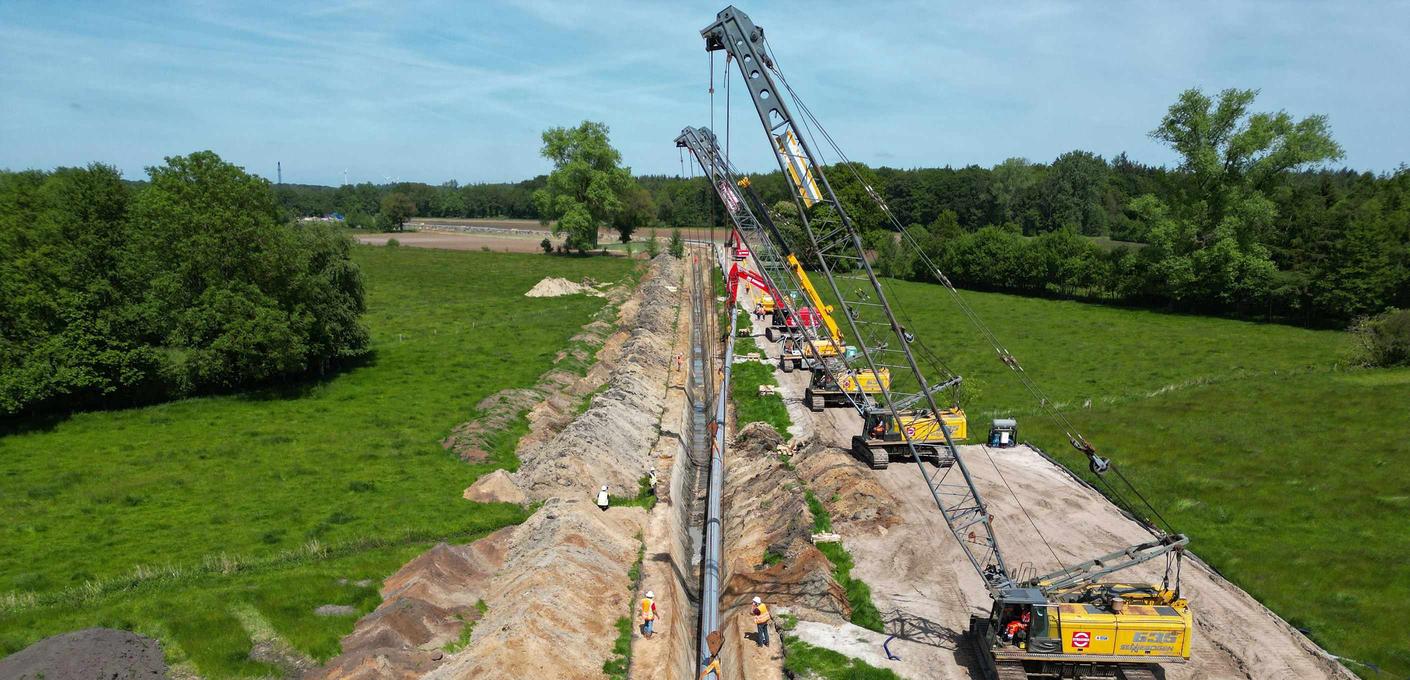
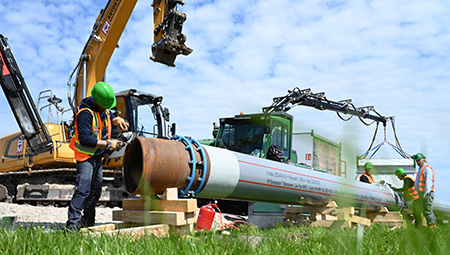
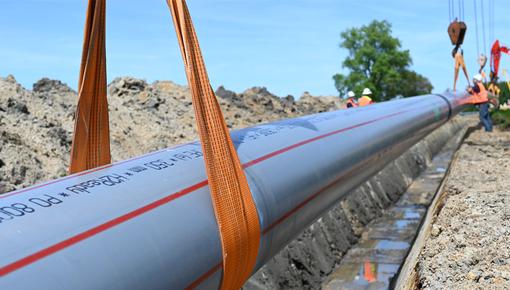
It's early morning on a major construction site near Oldenburg: Along the marked pipeline route, next to a prepared trench, the first stacks of steel pipes weighing several tons are already waiting. A crane lifts a pipe segment and two fitters guide it into place down to centimeter precision. Sparks fly as the weld seams are made. At the same time, an engineer documents the progress on a tablet, while her colleague checks the weld seam with ultrasound. Section by section, the new pipe system is disappearing into the ground – invisible, but crucial for the future energy supply. Part of the German hydrogen core network is being put in place here and will transport green energy from the North Sea ports to the industrial centers in the south in the coming years.
A gargantuan task:
Renovate, renew, retrofit
Germany's infrastructure is facing a huge upheaval. But while the need to renovate dilapidated bridges, roads and railways or the expansion of power lines is taking center stage in the public debate, a decisive part of the country's realignment is proceeding underground. A huge, largely invisible network of pipelines is supplying people and industry with water, heat and energy. Alone – according to the Federal Ministry of Economics, the German natural gas network extends over 600,000 kilometers – a distance that would reach around the equator 15 times.
This highly complex system must now be made fit for a future without fossil fuels – which means a great deal more than just refurbishing the existing infrastructure. The grids must be equipped for entirely new tasks – just take transporting new energy sources such as hydrogen for example. And accommodating new routes between producers and consumers. A veritable financial, technical and political tour de force. The indispensable material for this transformation: Steel.
The robust material of transformation
This is because steel combines properties that are ideally suited to the tasks at hand, namely high strength enabling the safe transportation of gases such as hydrogen under high pressure, along with durability and robustness that guarantee decades of use at low maintenance costs and maximum supply reliability. And because this material is 100 percent recyclable without losing any of its quality, steel is also sustainable – and therefore a perfect example of a functioning circular economy.
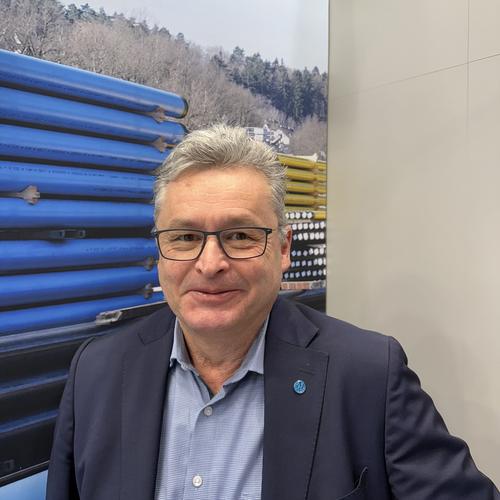
Unlike today’s bridges, which are in dire need of renovation, the major pipeline networks are largely in good condition and are very closely monitored. "Pipelines impress with an extremely long service life," says Konrad Thannbichler, Head of Sales at Mannesmann Line Pipe GmbH, a Salzgitter Group subsidiary specializing in steel pipes. "There are steel pipelines around the world that are over 100 years old. Oil pipelines made by a former Hösch or Mannesmann plant have been in operation at OMV near Vienna for 65 years without interruption. Pipelines have been in use in the Hamburg gas network for 50 years and were only recently assessed as suitable for the transportation of hydrogen at low pressure." Modern pipelines are also permanently monitored by means of a weak measuring current so that operators can check the condition of the pipeline at all times. Many of these pipes will have to be replaced in the distant future.
Nevertheless, action is urgently called for – prompted by the transformation of the energy and industrial landscape. The grids must be able to transport new materials, sometimes by way of different routes or even in the opposite direction than to date – away from individual, centralized feed-in points towards a decentralized system of renewable energy sources, import terminals and new, large-scale industrial consumers.

The new network: Hydrogen as a driver of the transition
The restructuring of the energy system necessitates entirely new infrastructure planning and the German hydrogen core network is the most prominent example in this context. By 2032, an almost 10,000-kilometer-long launch infrastructure will connect the key industrial centers, storage facilities and import harbors. The good news here: Around 60 percent of the existing natural gas pipeline network is also technically viable for transporting hydrogen. The remaining 40 percent, meaning almost 4,000 kilometers, will have to be produced and put down from scratch. Mannesmann Line Pipe was the first manufacturer in the world to develop certified pipes that meet the special requirements of hydrogen transportation. Going by the name of Mannesmann H2ready, these lines are the result of intensive testing and qualification of the materials for H2 and thereby provide the necessary safety reserves for decades of reliable operation.
The dual role: Shaping and designing the energy transition – and using it
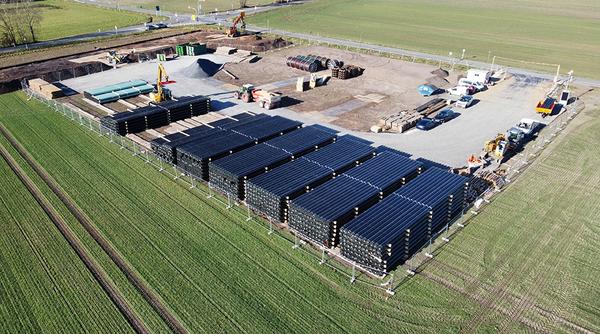
New production will also be necessary because old pipes are often quite simply in the wrong place: "Hydrogen does not usually flow in the same direction as natural gas, because the producers and users are entirely different," as Thannbichler states. “In future, the steel and chemical industries will be the major hydrogen customers.” And this also includes the Salzgitter Group itself: The company needs green hydrogen to decarbonize its own steel production as part of the transformation program SALCOS® and to produce CO2-reduced steel.
This closes the circle for Salzgitter AG: "Our dual role as a manufacturer of H₂-capable pipes and at the same time as a future user of hydrogen creates a very special position," as Thannbichler states. It embodies Salzgitter's vision of a consistent circular economy. The idea: Pipelines made of green steel transport the renewable hydrogen required to produce this very steel.
More than hydrogen: Universal solutions for all energy sources
However, the transformation of the pipeline infrastructure extends far beyond hydrogen. It also applies to the massive expansion of district heating networks, which is part of municipal heating planning, as well as to specialized pipelines for the capture and transportation of CO2 (carbon capture) from the cement or lime industry. Ammonia, an important chemical raw material and hydrogen carrier in industry, is also transported in special pipelines between ports, storage facilities and cracking plants or within industrial parks. After the ammonia has been converted back into hydrogen, the hydrogen is also transported onwards to industrial customers – and likewise in steel pipes.
Securing the supply of drinking water plays another crucial role. A look to the German grid reveals that the total water infeed is reduced by more than 400 million cubic meters per year due to leaks, according to the Federal Environment Agency. The continuous, ongoing need for renewal is high, and durable steel pipes help in keeping the networks safe and efficient. Last but not least, steel cable conduits form the foundation for the large electricity highways such as Südlink, enabling trenchless, user-friendly underground installation. Mannesmann Line Pipe GmbH 2024 has developed its own pipe connection system for this purpose, which has passed practical testing – also under challenging construction site conditions. Moreover, steel pipes are also required to route the power cables fed by offshore wind turbines to the seabed. "Regardless of the technological direction the energy transition may take: We are providing all the right products," as Thannbichler emphasized. "There is basically no building block of the transformation in which we are not involved with our solutions."
Genuine sustainability: political decisions are imperative
The prerequisites for a sustainable upgrade of the German green steel pipeline system are therefore in place. "But it's not enough for everyone to just ask for green steel – what counts in the end is what is actually used," as Konrad Thannbichler comments. Price alone is still often the deciding factor in tenders. "We need a clearly defined political framework so that quality and sustainability become the standard." The public sector has a responsibility to specifically consider sustainable materials and regional value creation when awarding infrastructure projects. Decisions favoring green steel from German production not only support the climate targets, but also strengthen domestic value creation and reduce dependence on global supply chains. "It would be nonsense to build pipelines for the energy transition and use conventionally produced steel for them," Thannbichler emphasizes. "The infrastructure for green hydrogen must itself consist of green steel – and this steel should ideally be coming from Germany, where it is produced."
Related topics
“Pragmatic regulation, not deliberate competitive disadvantages”
Lennart Schümann, an energy strategy and procurement expert at Salzgitter AG, explains what the Group needs on the road to green steelmaking – and how and what policymakers must deliver.
Read interview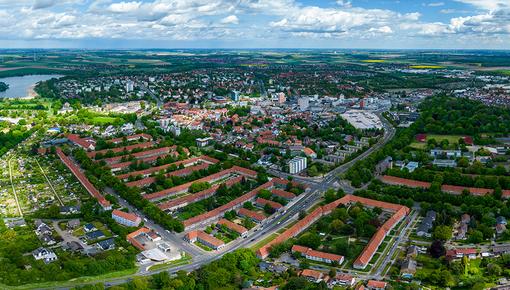
Setting the course to the future in Lower Saxony
Why Benedikt Hüppe, Managing Director of the Unternehmerverbände Niedersachsen (UVN) (Lower Saxony Business Associations), is strongly convinced of the adaptability, flexibility and sustainable future viability of Lower Saxony as a business location. And what he is demanding from policy makers.
Read interview
The address of this article has been copied to your clipboard.