
Close-up: A Child of the Steelworks
August 03, 2026 | Reading time: 9 minutes
From the blast furnace to the DRP: Marvin Brandeis helps shape the future of steel.
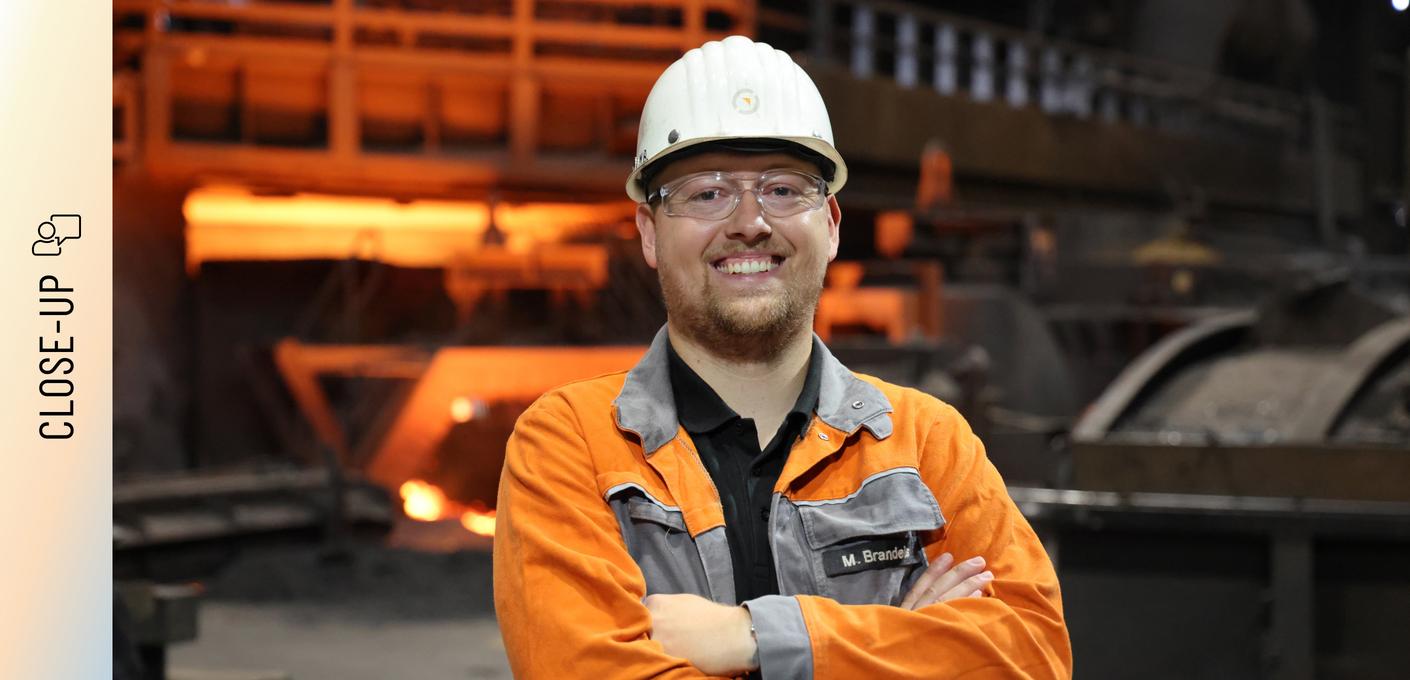
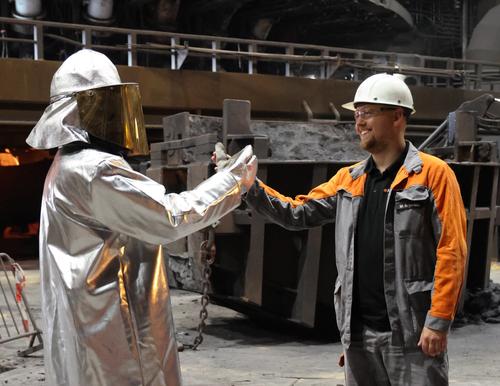
The aluminized coat is still part of Marvin’s everyday working world. So are molten pig iron, extreme temperatures, and processes that have shaped the image of steelworkers for generations. The job is complex, hot, physical – and something special. Marvin Brandeis loves this world. He is a blast furnace operator through and through. At the same time, the 29-year-old also represents the future of steel production in Salzgitter. As the final years of blast furnace operations get underway, he is already preparing for his new role in the direct reduction plant (DRP). In the future, the plant will be operated in a five-shift system by a team of 65 people – staffed exclusively by experienced colleagues.
When Marvin Brandeis talks about his work, one thing quickly becomes clear: for him, being a blast furnace operator is more than a job. It is a way of life. On his shift, he manages the entire furnace operation and is responsible for the team working outside at the furnace. However, SALCOS® is fundamentally transforming steel production – and with it, his professional home. Born and raised in Salzgitter, Marvin Brandeis coming to work at Salzgitter Flachstahl GmbH was practically a given. After training as an industrial mechanic, he soon found his way into blast furnace operations. In October, he will take up his new role as shift supervisor at the new plant and support its commissioning.
For him, too, it is a transformation.
What is direct reduction technology?
In conventional steel production, iron ore is reduced to pig iron in a blast furnace using coal. This process emits carbon dioxide (CO₂). In direct reduction, by contrast, iron ore is reduced to direct reduced iron (DRI) using a reducing gas. With the launch of the SALCOS® route, natural gas will initially be used as the reducing agent, with hydrogen gradually taking over later on. The DRI produced in the direct reduction plant is then melted down together with steel scrap in an electric arc furnace. When the first phase of the SALCOS® route is commissioned in 2027, CO₂ emissions at the Salzgitter site will already be reduced by around 30 percent. In the long term, emissions are expected to drop by more than 95 percent once the SALCOS® route is fully operational.

People often say that being a blast furnace operator is not a job title, but an identity. What defines this culture?
Being blast furnace operators is part of our DNA. We still work directly with molten pig iron here – that’s what makes you a true steelworker. Above all, the culture is defined by a strong sense of camaraderie. We work hard together and we eat together, whether on the early, late or night shift. Many colleagues have been here forever and often tell their ‘back in the day’ stories. The transformation inevitably means giving up a piece of your identity, because traditional work at the blast furnace and handling hot pig iron will cease to exist in its current form. That’s why this move feels bittersweet for me.
SALCOS® is fundamentally changing the technology. What has this transition been like for you and the rest of the workforce?
During my apprenticeship, I honestly didn’t give SALCOS® much thought at first. Later, during my master craftsman training, I was asked where I saw my professional future. That was when I realized I was interested in the new technology. Of course, a transformation like this initially creates unrest and uncertainty among the workforce. The process was facilitated as well as possible by the management of blast furnace operations together with the works council. They tried to take colleagues’ wishes into account, and I am glad that it worked out for me as well. When putting the teams together, it is important to ensure a good mix of experienced and younger employees. One of the biggest challenges in this transformation is knowledge transfer.
You will start as shift supervisor in the new direct reduction plant (DRP) on October 1. How do you prepare for a plant that has yet to be built here?
Being a shift supervisor at 29 makes me proud. I’ll be supporting the commissioning of the DRP from October, because you have to get to know a plant like this from the ground up. To get an initial feel for it, I went to Mexico for training and looked at an identical Tenova plant there. From a technical perspective, some things can be carried over from the blast furnace, but the team dynamics are almost more important. I already got to know some of my future colleagues in Mexico. In the DRP, we will have a fixed team of twelve people plus management per shift. We’ll figure out exactly who does what once we’re up and running.
How will day-to-day work – and with it the culture – change?
Day-to-day work will change significantly. The focus will shift more toward process monitoring, plant control and optimization. Most of the work is automated. The physical strain will decrease – but responsibility for the process will remain high. We’ll see how that changes our culture as well. One thing is clear: in the long term, the image of the steelworker in an aluminized coat will no longer exist as we know it. My wish for the future is to build a good shift team in the new plant as well, so that we can achieve the best possible results. And I’m already looking forward to being the one who, in ten years’ time, can say: ‘Back in the day, when we started up the DRP…'
Discover similar posts
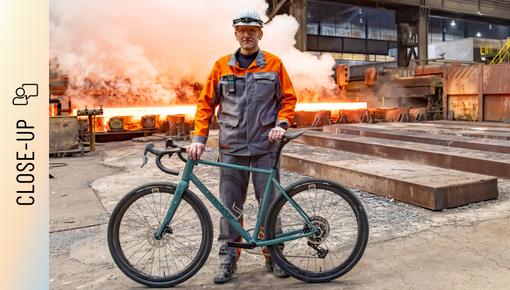
Close-up: Traveling to work on a steel bike
Marc Orenz, Head of Measurement and Control Technology at Salzgitter Flachstahl GmbH, commutes twice a week from Braunschweig to Salzgitter by bicycle. He deliberately chose a steel frame for his bike because he is familiar with the advantages of the material.
Read post
On the 1.5 °C pathway
Salzgitter AG is in the midst of the largest transformation in its history: This is how SALCOS® is driving the decarbonization of the steel industry.
Read postThe address of this article has been copied to your clipboard.