
From the hiss of the steelworks to the promise of the future: How steel speaks today
October 29, 2026 | Reading time: 17 minutes
Language is more than just vocabulary. It reveals how an industry works, what it takes pride in and the direction in which it is headed. In the steel industry, shifts in language therefore also tell a story about identity, technology and the future.
Everyday language still bears the imprint of metalworking. We forge plans, admire people with nerves of steel and strike while the iron is hot. These expressions draw on a world of furnaces, heat, sweat and physical strength – imagery that has long shaped perceptions of the steel industry. And it is not only everyday language that keeps this world alive. Whenever Germany’s Tagesschau reports on the steel industry, viewers see a man in a silver protective suit standing in front of glowing pig iron. It is an instantly recognizable image that helps shape the industry’s identity. Yet that identity is gradually fading – at least at the steelworks that are driving the transformation of steel production.
Today’s steel industry relies on sensors, algorithms and automated processes. In the future, AI-based technologies and hydrogen-based direct reduction will gradually become central to production. The latter will increasingly replace the coal-based blast furnace route. Anyone entering a modern steelworks will increasingly find control panels alongside slag runners.
When the picture in our heads no longer matches reality, language catches up. Not because anyone decides that it should, but because new processes need new words.
People who adopt new technologies gradually begin to use a new language as well, developing a different understanding of their own work and the environment in which it takes place. In some cases, this shift only took place with a change of generation, as Olaf Reinecke, longtime editor-in-chief of Salzgitter magazine STIL, observed: Later generations did not simply continue what had gone before; they deliberately changed many things – and communicated differently as a result.
Roots in mining
The language of steelmaking has deeper roots than many realize: numerous terms originated in mining. For centuries, the two fields were inseparably linked – no ore without miners, no steel without ore. The German word “Schicht” is a good example. In mining, it referred both to the amount of ore extracted during a trip underground and to the miner’s working time. In the steelworks, it referred to the amount of ore smelted in a single batch. Today, “Schicht” simply means a work shift.
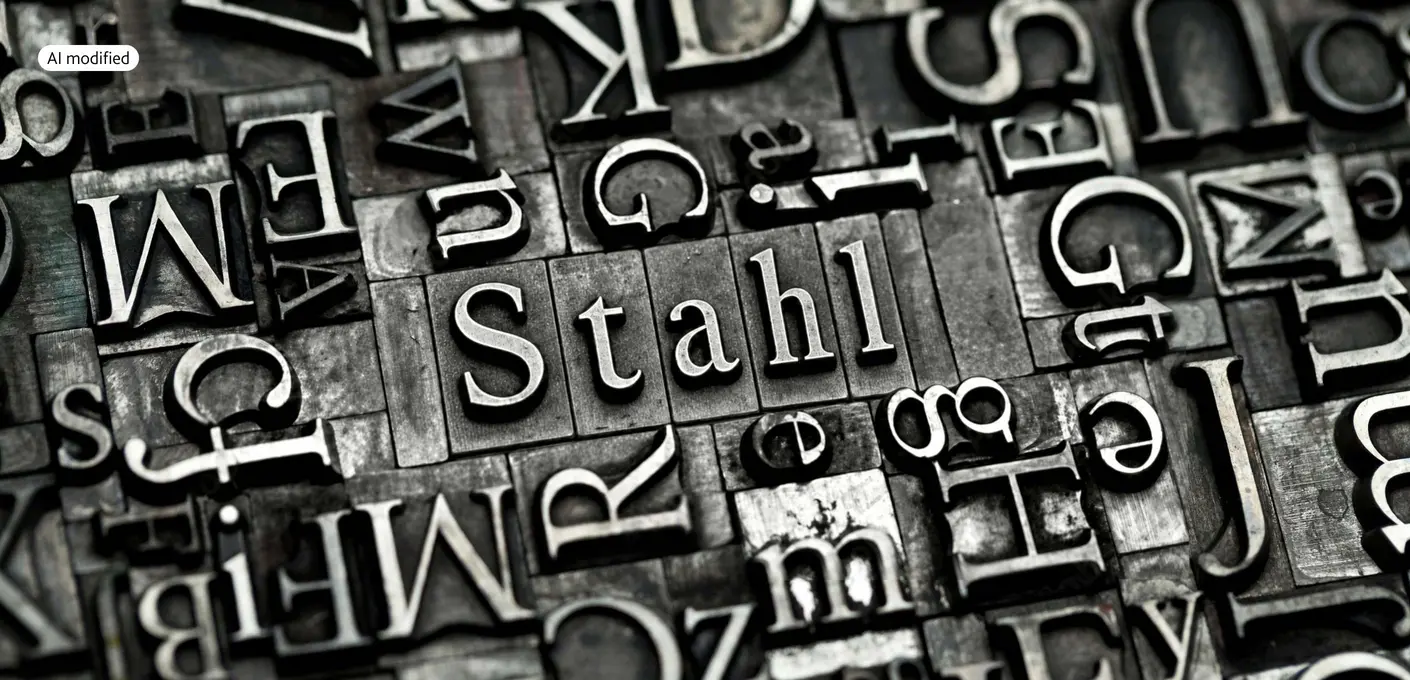
The word “steel” itself has ancient roots. It can be traced back to the Proto-Germanic stahlą, associated with the idea of standing firm or withstanding. In recent decades, however, the vocabulary surrounding it has shifted several times.
Up until the 1960s, the language of steel was rooted in the senses. People working in a steelworks used terms such as “tapping,” “melt” and “furnace burden.” You heard the hiss, smelled the coal and felt the heat and the sheer physical force. Every word carried with it a physical experience. From the 1970s onward, engineers began to shape the vocabulary: process optimization, throughput, plant efficiency. People disappeared behind the system. The language became more precise, but also more abstract. It no longer described what the work felt like, but how it functioned.
Around 2015, another shift began: green steel, H2-ready, carbon-neutral, campus. These new terms do not describe the present; they express a promise. They do not describe what is, but what is intended to be. Across all three phases, the overall movement has been from the sensory to the systemic, from material to process, and from the tangible to the calculated.
Why new technologies need new words
New processes introduce new terminology. Terms such as direct reduction, electrolysis and Power-to-X belong to specialist rather than everyday language. In the German steel industry, many such terms are adopted from English or used as acronyms and usually remain in that form. “H2-ready” is a prime example: before 2018, the term was hardly used in discussions of steel. Today, it appears in every annual report. It is a term that does not describe a property, but rather signals an intention: we are ready for hydrogen.
At the same time, familiar terms are taking on new meanings. “Reduction” was once purely a chemical term: iron oxide is reduced to iron. Today, it also refers to a reduction in CO2 emissions. “Cycle” once described the metallurgical flow of materials. Now it stands for a fully developed industrial circular economy.
Between the factory floor and the global economy
Language creates a sense of belonging, and in the steel industry it once functioned almost like a plant ID badge. Anyone who knew the industry term for a reusable casting mold was part of the group. Terms like these both set people apart and brought them together.
For a long time, this invisible ID badge reflected a very real division of labor: the men at the blast furnace spoke a different language from those in the executive offices. Putting that language into writing, meanwhile, was largely the preserve of the executive suite’s administrative staff. As Reinecke recalls, even into the 1990s people would say, “A senior manager in the steel industry does not sit at a typewriter.” For many years after that, executives continued to work without computers of their own. For decades, it was women who ensured that ideas, arguments and strategies were committed to paper in an appropriate and persuasive form. “Belonging, then, had its own language – and its own boundaries.”
Language shapes thought – or does thought shape language?
Terms in common use today, such as “decarbonization pathway” or “fuel switch,” do little to create a sense of connection or belonging within the steel industry. They cut across sectors; they are interchangeable and abstract. A chemical company uses them just as readily as an energy provider. They do not create a distinct sense of group identity.
That sensory connection is also being lost. Anyone who uses the term “slag” has seen, smelled and felt the material itself. Anyone who uses the term “Power-to-X” has encountered it in writing rather than through direct sensory experience. Regardless of the terminology, work instructions in the plant must be just as unambiguous today as they were in the past, because ambiguity can, in the worst case, lead to injuries or serious equipment failures. What is disappearing from the new language, however, is the pride in physical work, resilience and endurance. That, too, reflects a changing world of work in which different values have come to matter: sustainability, machine-assisted automated processes and efficiency.
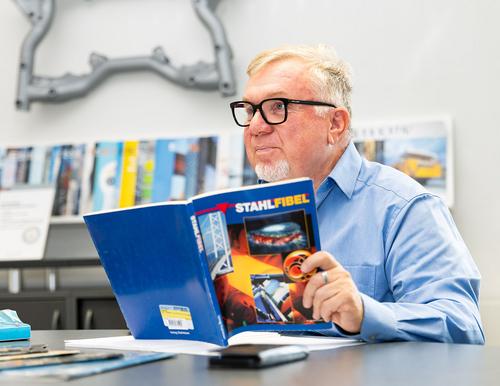
On the other hand, the new language opens doors that were previously closed. “Green steel” and “carbon-neutral” speak the language of investors, policymakers and the public. They provide access to funding and lead markets. To STEM graduates, a job title such as “Direct Reduction Plant Operator” sounds like a role with a future, not one that is becoming obsolete. Anyone who says “campus” instead of “steelworks” sees their workplace differently. And anyone who uses the internationally understood term “tapping” will be understood just as readily in Brazil, India and Sweden. Incidentally, “tapping” refers to the process of draining molten metal from a furnace.
For Reinecke, this internationalization is not a coincidence but a necessity: the industry’s main frame of reference today is the EU, “and English is simply the working language there.” Language skills are therefore not a bonus but a prerequisite. Anyone working internationally needs to be able to communicate effectively and make themselves heard, even if their English is not at native-speaker level.
What’s at stake in this shift in language
The new language has much to offer. But it also comes at a cost. The key is to strike the right balance. Abandoning the old language means losing a part of the industry’s identity; preserving it unchanged means losing the ability to move forward. The challenge is to retain that cultural identity while modernizing the language of the industry.
A study by the German Economic Institute shows just how important this is: language change is more than merely symbolic when more than 5.5 million jobs along the value chain in Germany depend on the steel industry. Employees are expected to be “active agents” in shaping the transformation. To do that, they need new knowledge and new skills.
Language change at Salzgitter
What does this shift sound like when viewed through the lens of a single company? In May 2026, Salzgitter CEO Gunnar Groebler spoke to FOCUS online Earth about the Group’s transformation. Not once in the entire interview did the word “blast furnace” appear. Instead, the discussion centered on green steel, direct reduction, lead markets and the carbon footprint. Groebler said: “If we are serious about this, we have to change. And that is exactly what we are doing.” His focus was not on preserving the status quo, but on actively shaping the future.
This is no coincidence. SALCOS®, the transformation program at the Salzgitter site, also represents the future of the steelworks and, for many people, has come to carry the emotional weight once associated simply with “steelworks” or “steel production.” The acronym is internationally accessible, conveys a sense of technological pioneering and helps create a sense of identity. At the same time, it also contains a clear link to the Group, with SALzgitter embedded in SALCOS®. The term sits exactly at the same intersection as the language itself: between traditional identity and a new promise.
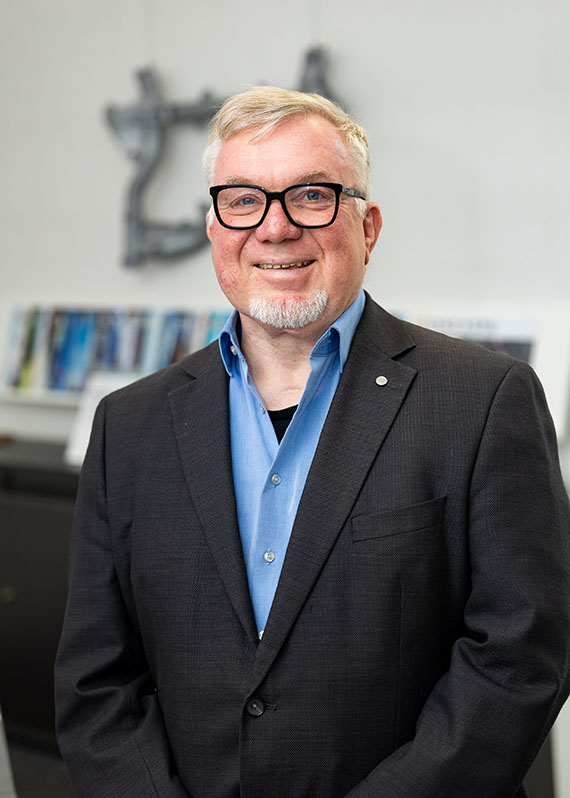
Olaf Reinecke experienced this shift firsthand. “For me, the ‘language of heat’ is the traditional language – and it still exists today. There are terms such as ‘Hüttenflöhe’ for the sparks thrown off by molten metal, ‘Fuchs’ for the channel used to separate iron from slag, and ‘Lanzenbär’ for equipment associated with the converter oxygen lance – all examples of traditional steelworks vocabulary used to describe parts of the plant or specific processes. And then there is the language used by technicians and engineers when they describe processes,” says Reinecke. “Both linguistic worlds still exist side by side today, but editorially we have repeatedly had to find new ways of bridging the gap between them.”
The line between technical language and accessibility has also shifted over the years. “Even when we understood the terminology and context internally, they often still needed explaining to an outside audience. A story from our ‘world of steel’ always had to be written in the magazine so that readers working in completely different fields could understand it immediately,” says Reinecke, describing the editorial standard he set. That is why, as Reinecke puts it, “I kept using certain key terms again and again so that they would become standardized.”
What remains, and what comes next?
The language of the steel industry will continue to evolve. Changes in language are proof that transformation is real – not on roadmaps, but in the everyday lives of the people who work with steel. There will be words that no one knows today. Terms that still sound unfamiliar now will be commonplace in ten years’ time. Others, which have shaped generations of steel industry employees, will survive only in archives.
There is nothing wrong with carrying a little of the old language of steelmaking into the future. Preserving that language does not mean being stuck in the past. It is part of the industry’s cultural heritage and helps connect the people carrying this transformation forward. Anyone who has spent decades working at a blast furnace can reasonably expect their experience to retain a place in that future. Which leaves one question: which words will we take for granted in ten years’ time – and which ones will we miss?
Discover similar posts
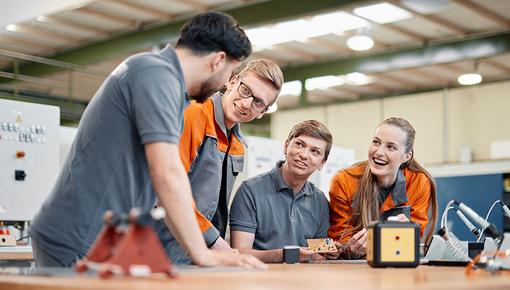
Employment, training, future – how Salzgitter AG is strengthening the region
Salzgitter AG is creating perspectives and opportunities – for a sustainable steel industry as well as for skilled and junior employees. How the Group attracts young people through targeted promotion, regional roots and transformation.
Read post
Major renovations: Steel countering Germany's standstill
A total of 500 billion euros for a stable future: How we are leveraging the government special fund to upgrade our infrastructure and operate in a more climate-friendly way. And what role steel is playing in all this.
Read postThe address of this article has been copied to your clipboard.