
Major renovations: Steel countering Germany's standstill
March 03, 2026 | Reading time: 10 minutes
A total of 500 billion euros for a stable future: How we are leveraging the government special fund to upgrade our infrastructure and operate in a more climate-friendly way. And what role steel is playing in all this.
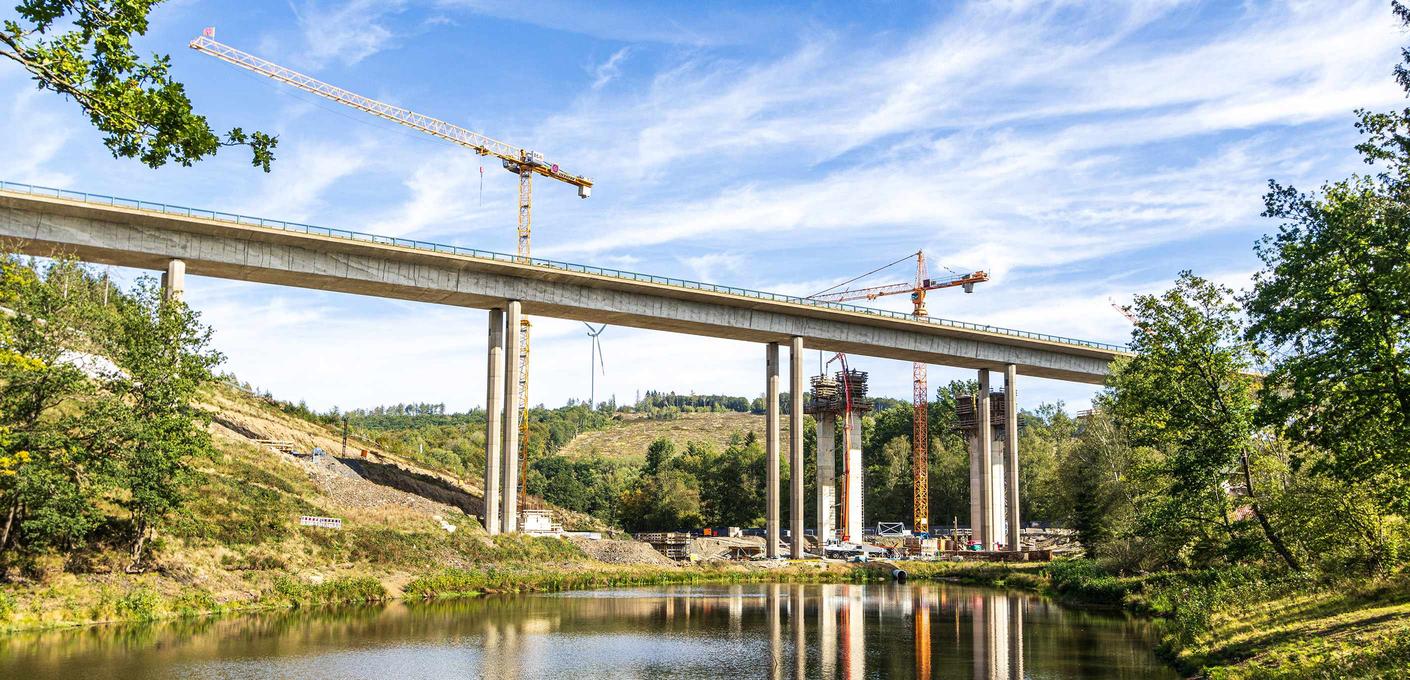
Yes, we can: On December 22, 2025, Chancellor Friedrich Merz cut the ribbon on the first section of the new Rahmedetal Bridge on the A45 autobahn at 12:03 p.m. some 10,000 tons of steel went into this section of the bridge alone, taking four years to build – which is one year less than originally planned. And that is speed that pays off handsomely: according to calculations by the German Economic Institute (Institut der deutschen Wirtschaft, IW), the early opening of the steel composite bridge will spare the region from suffering economic losses of up to 300 million euros.
The importance of an intact infrastructure for a country's economic strength was also demonstrated in this case when it finally crumbled: The closure of the highway bridge near Lüdenscheid alone incurred costs of 1.5 billion euros – triggered by traffic jams and detours. But also because the region's poor accessibility impacted on the local retail and gastronomy sectors.
A conciliatory conclusion to years of trouble – and for Gunnar Groebler, CEO of Salzgitter AG, a two-fold pointer to the condition and future of Germany as a business location: "Firstly, it is high time for major reconstructions of our infrastructure. On the other hand, this mammoth task makes it clearly evident: Without steel, Germany stands still."
Where Germany now needs to dismantle, reinforce and build – with steel
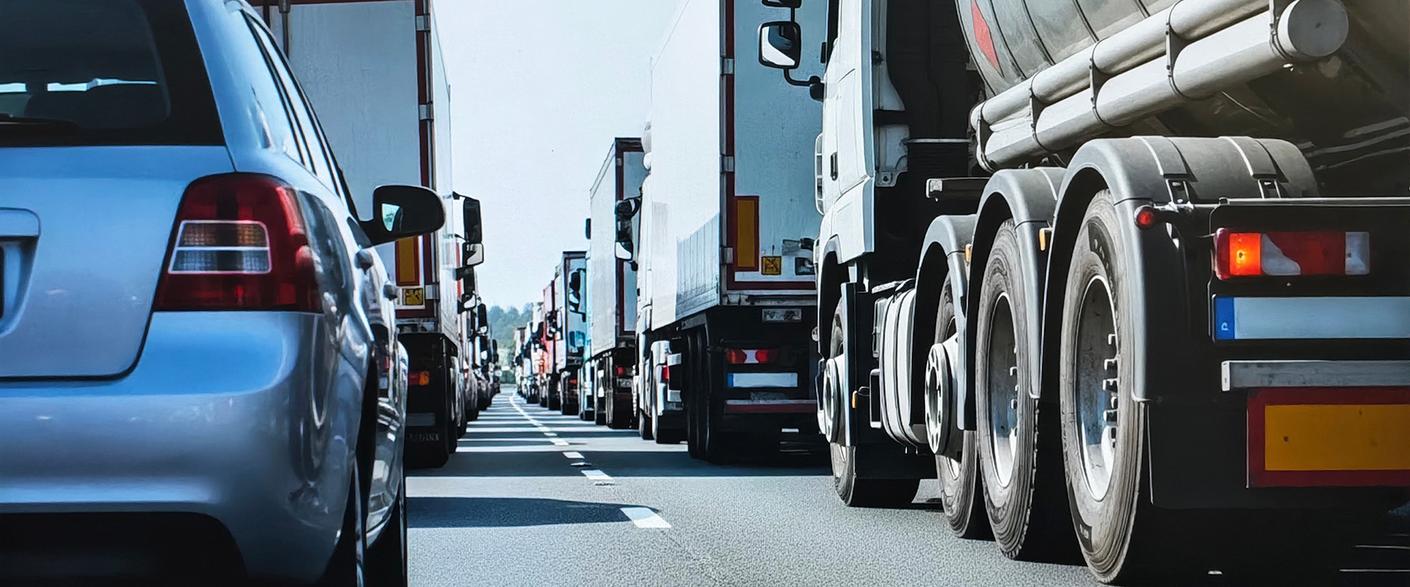
Lüdenscheid is everywhere: Germany's infrastructure is not only at the limits of its capacity when it comes to bridges; our country's physical operating system is cracking and crumbling, creaking and crunching at every turn. According to estimates by the Transport & Environment (T&E) organization, some 16,000 bridges in the long-distance network alone need to be replaced or at least reinforced. The bottlenecks on roads and railways are a burden on the economy: In a survey by the IW from the spring of 2025, 84% of the companies surveyed stated that they were impacted by inadequate transport routes.
The energy infrastructure – above all the electricity and hydrogen grid, but also wind turbines – and buildings such as hospitals, schools and sports halls are also suffering from massive refurbishment and renovation backlogs.
Living off the substance for decades
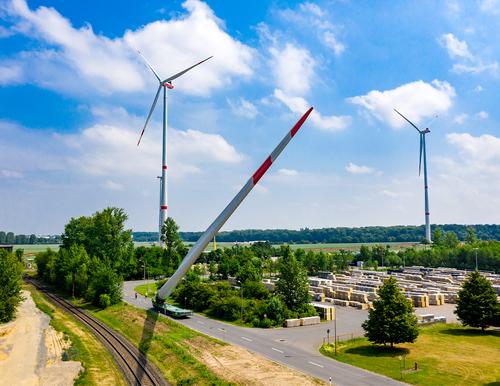
The fact that we have been living off the existing substance for far too long is now taking its toll: After the rail reform in the mid-1990s, the railroad network and train fleet remained underfunded for decades. In the road and bridge construction area, most of the money was spent on new buildings; too little money was left over for maintenance – criminal negligence for an infrastructure that in many cases dates back to the period from 1960 to 1985 and has been undergoing far greater use than originally expected due to the massive increase in heavy goods traffic. It is high time for the 500-billion-euro Special Fund for infrastructure and climate neutrality to bring our infrastructure back into shape.
Steel: 2500 different types with systemic relevance
Even if the debate mainly revolves around concrete, budgets and bureaucracy – one thing is obvious: Steel is the material that is indispensable for implementing the infrastructure package. Because without steel, there are no bridges. No electricity pylons. No school sports halls. No wind farms. No railroads. No data centers. Steel is not only the crucial element for bridges; it reinforces tunnels and noise barriers just as much as it is part of the construction machinery that produces them. Steel columns and girders provide large buildings with the necessary stability. The use of steel increases the longevity of buildings while reducing maintenance costs. Consequently, steel is a crucial material for the resilient and secure future of German infrastructure.
More than 2,500 types of steel are at work here – for wires, coils, heavy plates, beams, bars, tubes or rails.
But the iron-carbon alloy is much more than a physical material – it is the industrial foundation of entire value chains and therefore a bedrock for the success of other industrial sectors in Germany – from mechanical engineering to the automotive industry, from energy and infrastructure to the defense industry.
Around 80,000 people are working in the steel-producing industry in Germany – in the Ruhr region as well as in Saarland, Brandenburg, Lower Saxony, Bremen or in Bavaria. A good four million employees are active in steel-intensive industries. Which means: A good two thirds of all industrial jobs in Germany have connections to steel. "The foundation for a strong Germany is a strong industry and the steel industry in particular," confirmed Federal Minister of Finance Lars Klingbeil at the steel summit. "An industry that ensures resilience."
Domestic production safeguarding stable supply chains
The importance of domestic steel production for Germany as a business location has been demonstrated by calculations presented by economists at the University of Mannheim: Without domestic steel production, the German economy could lose up to 50 billion euros a year in added value, for example if non-European suppliers such as China were to reduce their exports. "Economic resilience for Germany and Europe needs a strong German steel industry that transitions to climate-friendly production rapidly and across the board," the study concludes. Consequently, the question of reliable, durable materials that are available in Europe is of central political importance.
Climate change: Green steel for green infrastructures
But steel is far more than just a stabilizing factor – as an engine, as a driving force, steel can accelerate Germany's decarbonization – provided that we build and rebuild in a climate-friendly, resource-saving manner and with low-emission steel. A climate-neutral steel industry in Germany translates as around 30 percent lower industrial emissions.
Therefore, the special fund (Sonderfond) for infrastructure and climate protection is a good opportunity to boost demand and the use of climate-friendly, domestic steel – and drive the decarbonization of the steel industry in Germany forward. This is due to the fact that the special fund can stimulate demand for low-emission steels and strengthen domestic steel production. Especially given that steel from local production disconnects dependencies on global supply chains, creates supply security and safeguards industrial jobs.

"The 500 billion euros for Germany's infrastructure will only become an investment in the future if clearly defined competitive award criteria apply that promote domestic value creation – and if the quality, durability and carbon footprint of the materials involved are convincing," as Salzgitter CEO Gunnar Groebler stated. A climate-friendly infrastructure package is now offering the German government a historically unique window of opportunity to massively strengthen the domestic economy, while at the same time achieving its own climate targets within a shorter time span.
Related topics
![[Translate to Englisch:]](/fileadmin/stil-magazine/_processed_/c/7/csm_Header_Rohrinfrastruktur_900x510_a66f68b4b8.webp "[Translate to Englisch:]")
The invisible grid of the energy transition
A significant share of Germany's ongoing industrial transformation is taking place underground: The conversion, expansion and new construction of the pipeline networks for thermal energy, water and hydrogen is the largest and probably most diffuse construction site in the entire country. A Herculean task in which steel pipes are putting down the technological foundation.
Read post
Steel bridges: faster construction, longer service life
Germany's bridges are dilapidated and run down, while renovation is stalling. But solutions are at hand: Find out how steel is combining speed with cost efficiency and stability in bridge construction.
Read post
Modular principle
Cutting, rolling, welding: Salzgitter AG is expanding its defense business with a modular system and a new, group-wide sales organization.
Read postThe address of this article has been copied to your clipboard.