
Transformation of steel production: New route, proven quality
![[Translate to Englisch:]](/fileadmin/stil-magazine/_processed_/c/f/csm_Header_Alexander_Gering_2820x1360_1893cc1a9f.webp "[Translate to Englisch:]")
July 21, 2026 | Reading time: 9 minutes
How Salzgitter AG's research is actively supporting the transformation to a hydrogen economy and the switch to low-CO₂ steel.
There is a loud rattle, followed by a bang. A hydrogen tank made of high-strength steel has just burst in a controlled manner at the Salzgitter Mannesmann Forschung GmbH test center in Duisburg. What sounds like an accident to the layperson is actually success for Alexander Gering, Group Leader in the Mechanical Testing division. In a series of tests, components are deliberately exposed to increasingly high hydrogen pressure until they reach their load limit. Knowing exactly where that point lies is essential. To transport hydrogen in pressurised vessels or use it in vehicles, it must be highly compressed. This generates high pressures that the steel from which the vessel is made must be able to withstand over the long term – including under cyclical internal pressure loads. "We want to know exactly where the limits of the material lie and prove that the components are safe even under the most demanding conditions," explains Alexander Gering. “Each of these burst tests provides us with reliable data on how a steel behaves under hydrogen stress and whether it is suitable for safe utilization.”
New route, new rules
These stress tests are an important part of the transformation currently under way at Salzgitter AG: the transition to lower-CO₂ steelmaking processes. However, hydrogen brings along some new challenges.
In the future, hydrogen is to replace coal as a reducing agent in steel production. However, hydrogen-based direct reduction instead of the classic blast furnace route entails a great deal more than just replacing individual plants and fuels: It is fundamentally changing the processes in steel production. “As there is still considerable scope for further development, we are closely examining the impact of our transformation on metallurgical processes,” explains Dr. Benedikt Ritterbach, Managing Director of Salzgitter Mannesmann Forschung GmbH, the central steel research company of Salzgitter AG.
This can be seen, for example, when sponge iron obtained by direct reduction is melted together with scrap in an electric arc furnace to produce crude steel. In the electric arc furnace, due to the process, the melt is more exposed to atmospheric influences than in the classic converter route. "This allows additional nitrogen to enter the melt," says Ritterbach. This can be particularly critical for highly formable steels, such as those types of steel the automotive industry requires for automotive body applications. This is because nitrogen can reduce the formability of the steel. Formability is essential for shaping complex components such as doors and wings. “We are investigating which nitrogen content is critical for which types of steel and what measures we can use to safely limit it.”
The experts are also concerned with the handling of steel scrap and its recycling in electric arc furnaces. This is because scrap can introduce unwanted by-elements into the melt such as copper from old cables. Research must therefore precisely define for each steel grade which impurities are tolerable and to what extent. One thing is clear: While hydrogen will replace coal in the future, product quality, supply capability and a competitive cost framework must be ensured. "We must ensure this across all production steps and processes," adds Ritterbach.
Endurance test for the hydrogen infrastructure
In addition, the hydrogen economy is opening up a second challenging area of development for the Group. Because if H₂ becomes an important energy source in other industries in the future, the steels that are used there in pipes or tanks, for example, will have to withstand new loads. Among other things, Ritterbach and his teams are researching hydrogen-induced embrittlement. This means that, under load, hydrogen can penetrate the steel and trigger damage mechanisms within it. In special test programs such as the Duisburg burst test, the resistance of material and weld seams is tested under extreme conditions. "We conduct a wide variety of material and component tests under pressures of up to 1000 bar," explains Ritterbach. Such test programs provide the foundation for evaluating steels for their use in hydrogen infrastructure.
Mannesmann H2ready® technology
Mannesmann H2ready® steel pipes are designed specifically for the transport and storage of hydrogen. To ensure maximum safety and the longest possible service life, they are designed to meet, or even exceed, the requirements of key directives and standards. In collaboration with the Group’s in-house development partner Salzgitter Mannesmann Forschung, Mannesmann H2ready® technology is under continuous development. In addition to general requirements, the company also implements individual and highly demanding customer specifications.

Obtaining reliable data the efficient way
In order to address the various challenges arising from the transition to a hydrogen-based economy and the shift to lower-CO₂ steel production efficiently, Salzgitter Mannesmann Forschung has optimized its own processes in order to answer the diverse development questions efficiently. The decisive factor here is that the manufacturing and processing procedures of steel-producing and steel-processing plants can be mapped and reproduced over extensive processes and steps in the laboratory – both experimentally and numerically. Only a few process steps, such as the blast furnace process, naturally cannot be validly simulated on a laboratory scale. Laboratory work and simulations interact iteratively in this process: the laboratory tests are used to validate the models. The insights gained in this way, in turn, help optimise the model input data.
The rapid laboratory screening of new steel grades with micro-melts, that is material quantities of between two and 300 kilograms, represents an important initial step. These routines can be performed involving little effort, incur only low costs and thus provide reliable information on material properties and suitability for further development at a very early stage.
Based on these steps, additional special procedures enter the picture – including the so-called "embedded ingot rolling". Welded-in cylindrical laboratory melts are inserted into a large steel slab weighing up to 30 tonnes, and guided through the actual production chain together with the slab. This allows new materials and variants to be tested under real conditions and a direct comparison to be made with the standard product.
The efficiency gains are considerable: In the past, a single test under real conditions required a complete operational melt with around 200 tons of steel, which had to be written off if unsuccessful. Today, several variants can be examined in parallel and in a far more resource-efficient manner. "We are continuously comparing simulations and test data. This enables us to achieve reliable results quickly," Ritterbach explains. This approach ensures that innovations are not only technically convincing but also cost efficient.
Discover similar posts
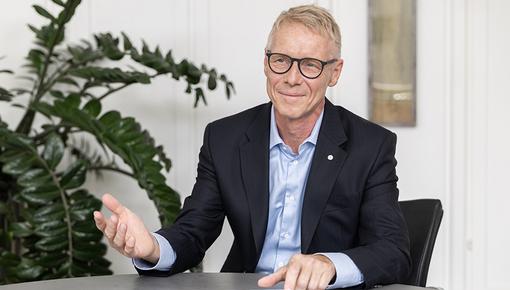
"Innovations don't happen in the conference room"
How Benedikt Ritterbach, Managing Director of Salzgitter Mannesmann Forschung GmbH (SZMF), is aligning Salzgitter research to support the transformation to low-CO₂ steel production.
Read interview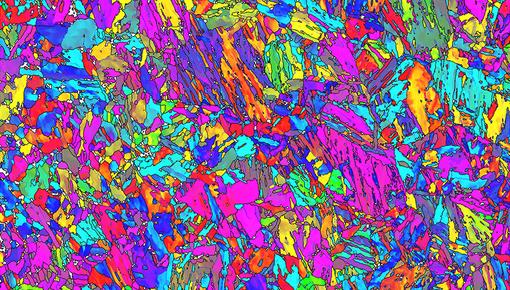
High-tech research exploring steel’s innermost core
Uncovering the secrets of steel on a daily basis: in Salzgitter and Duisburg, the experts at Salzgitter Mannesmann Forschung GmbH (SZMF) analyze the microstructure of the material.
Read postThe address of this article has been copied to your clipboard.