
No Steel, No Energy
![[Translate to Englisch:]](/fileadmin/stil-magazine/_processed_/d/0/csm_Header_Ohne_Stahl_keine_Energie_2820x1360_3dd040c08e.webp "[Translate to Englisch:]")
August 26, 2026 | Reading time: 3 minutes
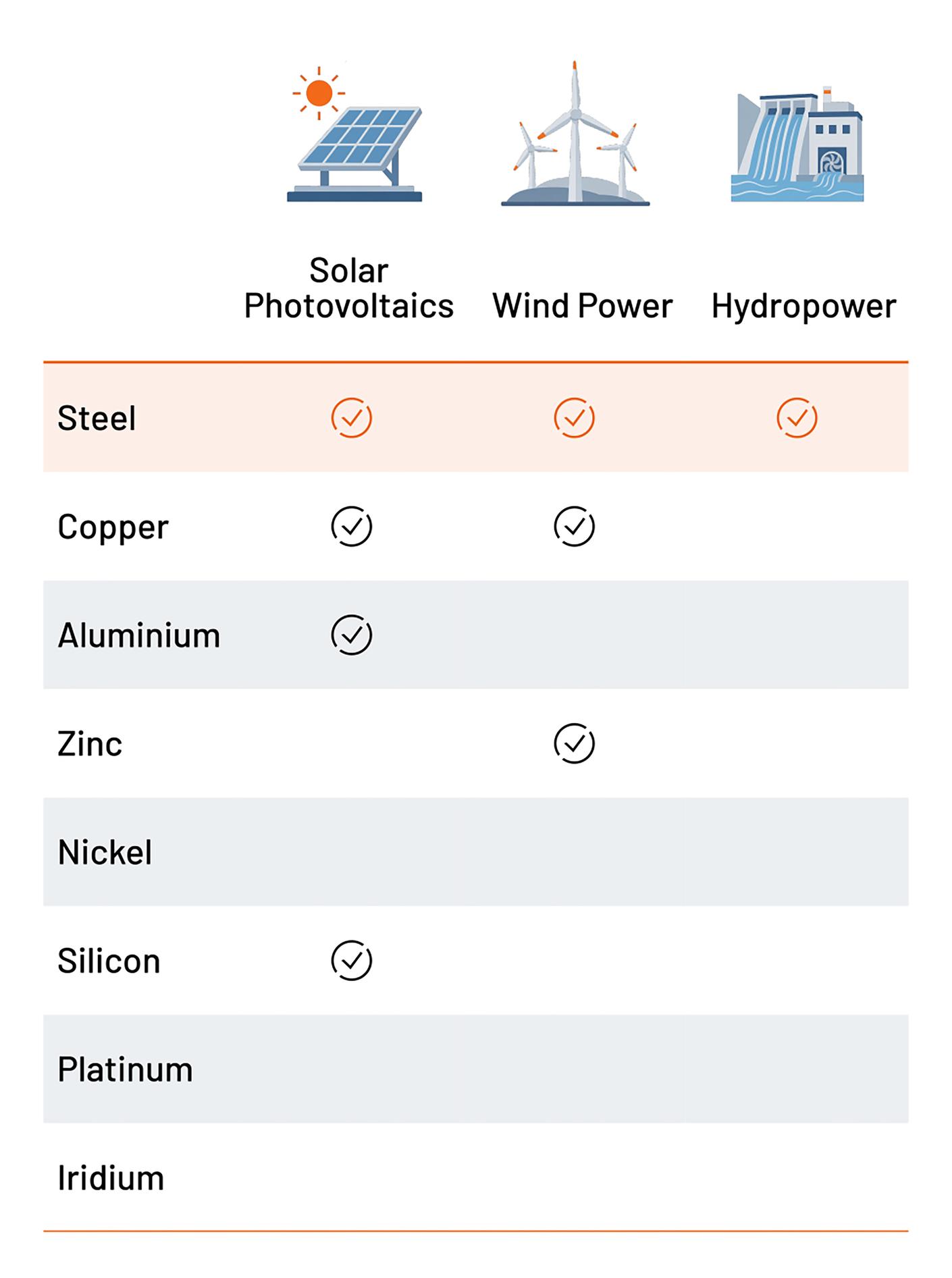
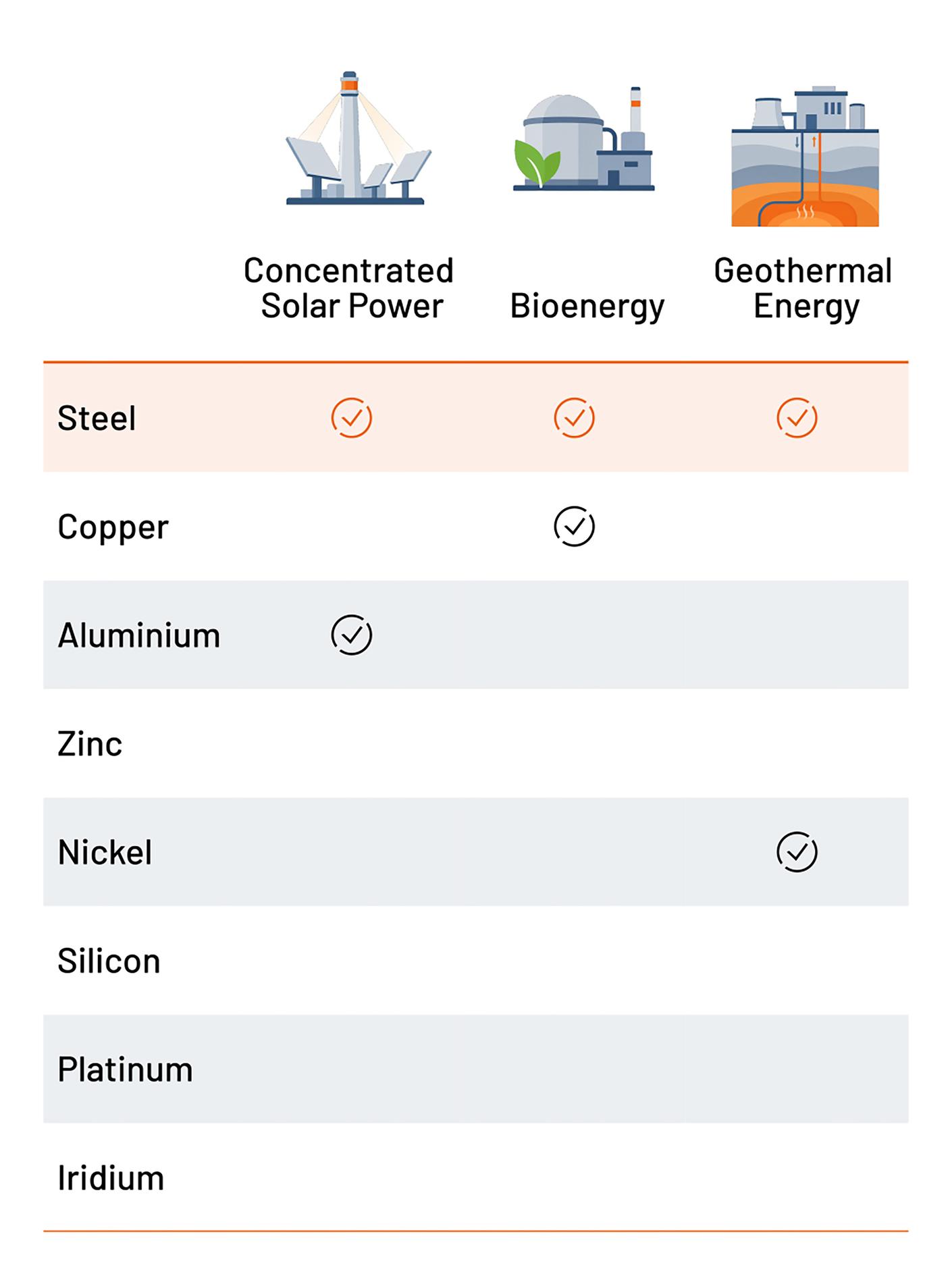
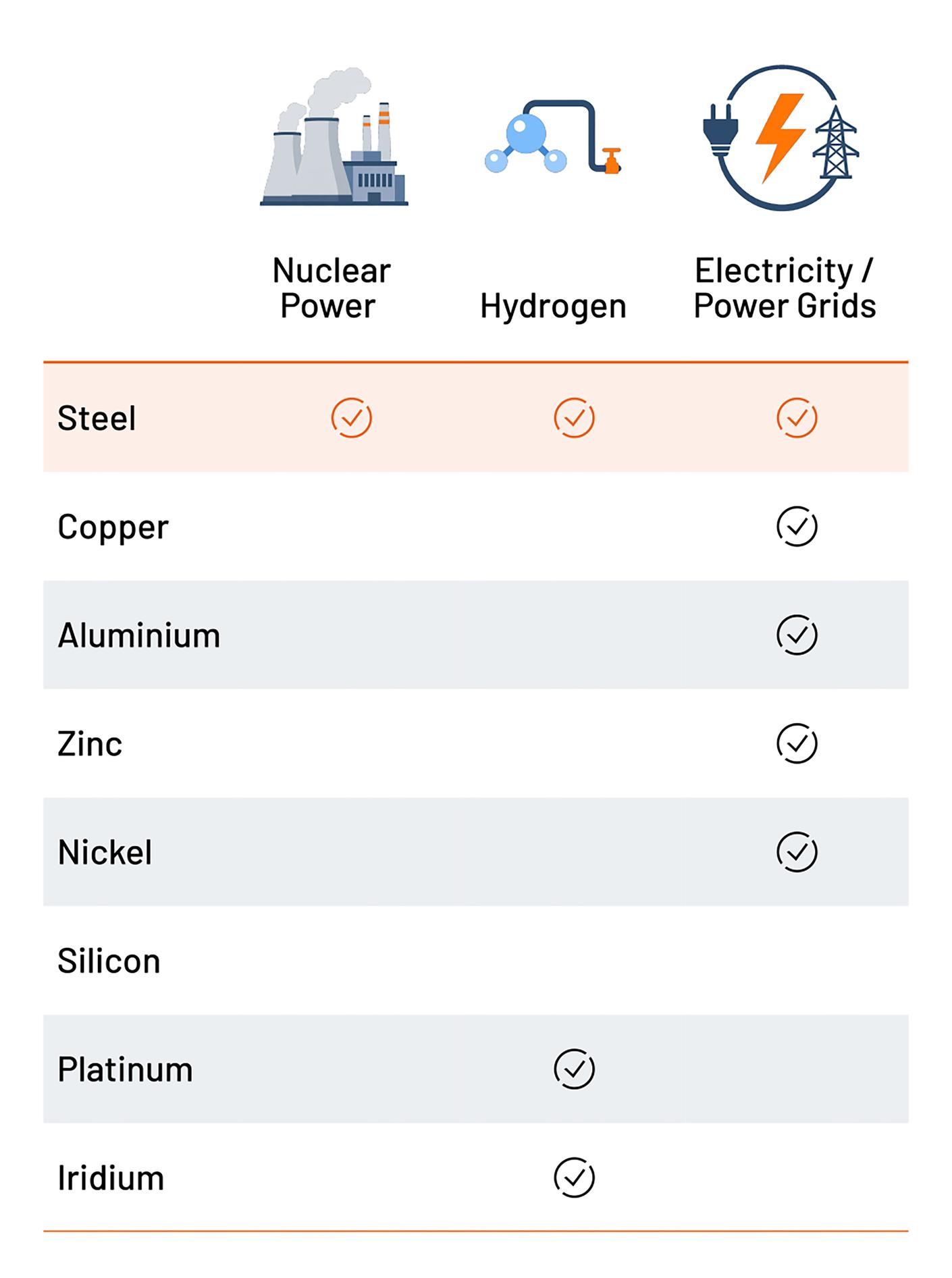
There is steel in every single kilowatt-hour. Whether it’s wind turbines, solar power plants, nuclear power plants, or geothermal energy – this material is the backbone of all energy sources.
Whether solar or wind power, nuclear power, or hydropower: Electricity cannot be generated without steel. After all, steel is on the job in every power plant, every facility, in every piece of equipment – in rotors and pipes and tubes alike. According to industry estimates, the planned expansion of renewable energy by 2030 alone will require several million metric tons of steel for foundations, towers, frames, racks, and grids. And that is no wonder: Even a single wind turbine with a capacity of five megawatts contains 500 to 600 metric tons of steel – mostly in the tower. Solar power plants of all types need it for their support structures. And what about nuclear power? Reinforced concrete walls shield against radiation, while the reinforcing steel prevents the concrete from yielding under pressure. In a pressurized water reactor, this amounts to up to 80,000 metric tons of steel.
From the foundations to the grids and nets: Steel is versatile
The role of the material extends far beyond the power plants themselves. Steel pipes are the most important means of transporting green hydrogen – pressure-resistant, leak-proof, and designed for large volumes. Geothermal energy, which harnesses thermal energy from deep within the earth, relies on steel drill pipes because they retain their shape even at high temperatures and can withstand the immense pressures underground. Steel power poles support the power lines through every storm – and they've been ensuring this for decades without fail. And in many cases, the materials involved – for example, in the towers of wind turbines – can be recycled at the end of the turbine’s service life, allowing them to be reintroduced into the cycle.
Discover similar posts
Hydrogen Supply Agreement: Negotiations in terra incognita
10,000 tons of green hydrogen per year: What sounds like the conclusion of a standard supply agreement actually marked a pioneering achievement involving Salzgitter AG and its partner EWE. How to negotiate a contract without any existing templates – and what this entails for the steel industry.
Read post
Built to last: Pioneering bridges made of steel
The oldest steel bridges in the world were built for horse-drawn carriages, yet they are so sturdy that they are still suitable for modern road and rail traffic.
Read postThe address of this article has been copied to your clipboard.