
PET aus Hamburg für den Weltmarkt
28. September 2026 | Reading time: 7 minutes
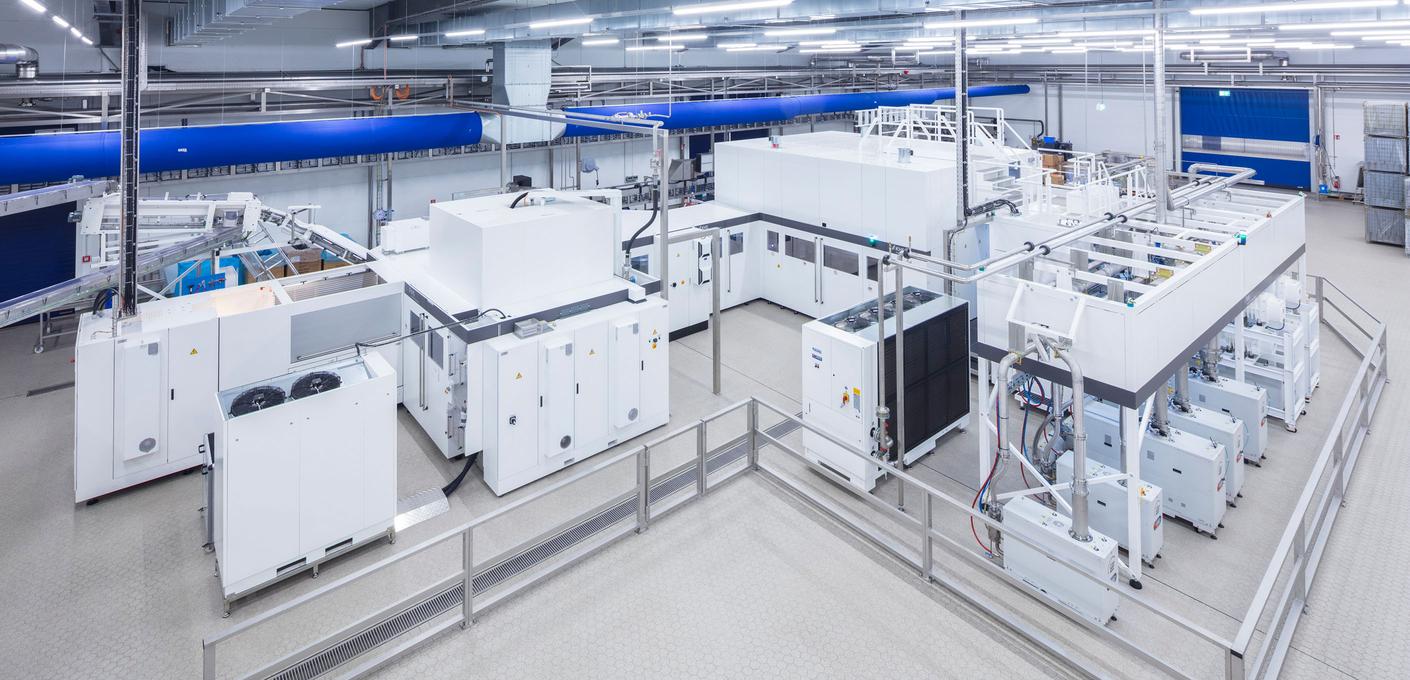
Die KHS Gruppe, eine Tochter des Salzgitter-Konzerns, baut in Hamburg die Produktion ihrer erfolgreichen PET-Beschichtungsanlagen aus. Ein Bekenntnis zum Standort Deutschland.
What is heavy plate?
Heavy plate refers to flat steel products with a thickness of approximately 6 millimeters or more that leave the rolling mill as flat sheets – often several meters wide and over ten meters long. They are deployed wherever heavy-duty, high-strength steel structures are required: in wind turbine towers, bridges, ships, construction machinery, or pressure vessels. Ilsenburger Grobblech GmbH specializes in manufacturing highly specialized grades: wear-resistant steels (BRINAR®, MAXIL®) for mining and construction machinery, as well as security steels (SECURE) for protective applications – and all these high-quality grades require special care during cutting.

Today, approximately 23 terawatt-hours of energy flow into the plant each year – primarily in the form of about two million metric tons of coking coal and pulverized coal. After the complete conversion as part of the SALCOS® project, the total will stand at around 20 terawatt-hours – but in the form of electricity, natural gas, and hydrogen.
The core of the program: SALCOS® opens up primary steel production to renewable energy forms. This is because the traditional blast furnace relies on carbon in solid form – and this cannot be meaningfully decarbonized. Consequently, the new process relies on a combination of a direct reduction plant – which is powered by a gas mixture (initially primarily natural gas, and later increasingly hydrogen) – and electric arc furnaces, which run on electricity.
Since green hydrogen is produced from renewable electricity, it is ultimately the key energy source. “The goal of SALCOS® is clear,” says Mecke. "We are making primary steel production accessible to renewable energy sources." “And climate-friendly hydrogen is, in the end – if you like – also electricity – just in a different form.”
The European heavy plate market is regarded as oversupplied. To what extent does the current investment help the company hold its own against the competition?
Historically, European heavy plate capacities were designed for mass-market segments such as shipbuilding or bridge construction and are simply too sizeable for today’s demand. Furthermore, when it comes to standard steels, it’s nearly impossible to win the price wars against low-cost countries. We’re taking a different approach: We are relying on metallurgical expertise and know-how, the most advanced, state-of-the-art heat treatment, and now a cutting process that preserves the material properties right down to the very edge. The waterjet cutting system completes a production chain that is centralized at the Ilsenburg site, ranging from alloy development to sheet metal ready for shipment. This requires less tonnage than a mass-production business, while involving significantly greater vertical integration – and this is where we hold a competitive advantage.
Discover similar posts
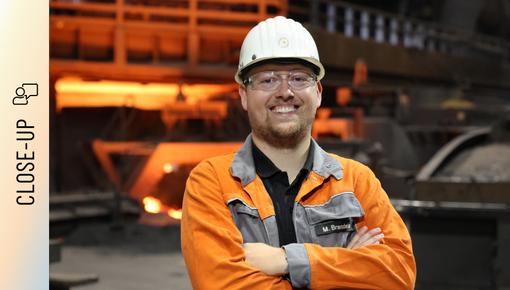
Close-up: A Child of the Steelworks
From the blast furnace to the DRP: Marvin Brandeis helps shape the future of steel.
Read post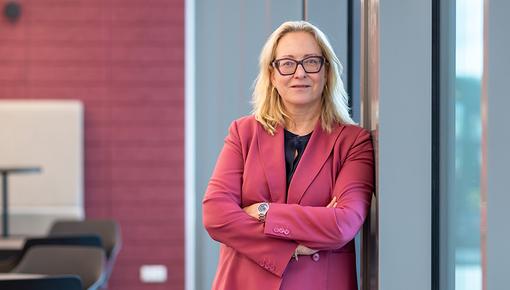
Back to black: Salzgitter Group stabilizes earnings
A weak economy, high energy prices, and global overcapacity: In this interview, CFO Birgit Potrafki explains how Salzgitter AG overcame adverse conditions to deliver stable earnings in 2025, the role played by the P28 earnings improvement program and the exchangeable bond, and why she is cautiously optimistic about the new financial year.
Read interviewThe address of this article has been copied to your clipboard.