
Route Change
![[Translate to Englisch:] Luftaufnahme der SALCOS® Baustelle in Salzgitter.](/fileadmin/stil-magazine/_processed_/b/9/csm_Header_Baufeld_Fruehjahr_2820x1360_bee4b3b2aa.webp "[Translate to Englisch:] Luftaufnahme der SALCOS® Baustelle in Salzgitter.")
September 02, 2026 | Reading time: 13 minutes
Higher energy consumption – and steel is becoming greener nevertheless? Our energy expert Stefan Mecke explains how the energy sector of Salzgitter AG is changing in the course of the ongoing transformation and why, although SALCOS® will ultimately require more electricity, the steel actually produced will still have a smaller carbon footprint.
Key points at a glance
- Low CO₂ steel requires more electricity and hydrogen than conventional steel – without raising the total energy requirements.
- The key to decarbonization is a shift in energy sources – a so-called “fuel switch”: away from coke and coal, and toward green hydrogen and renewable electricity.
- Implementing its SALCOS® transformation program, Salzgitter AG is making its primary steel production compatible with renewable energy – by way of direct reduction technology and electric arc furnaces.
- Depending on the hydrogen content, CO2 emissions are reduced by 60 to 95 percent compared to the conventional blast furnace process.
- The transition to low-CO2 steel production at the site is expected to be completed by the mid-2030s.

Mid-February 2025. A flurry of snow is blanketing the Salzgitter AG plant grounds with a fine white layer. With temperatures below freezing, the first symbolic groundbreaking ceremony will take place for one of Europe's largest green hydrogen production facilities, delivering 100 megawatts of electrolysis capacity and state-of-the-art pressurized alkali electrolysis technology. Today, a little more than a year after construction began, the facility is clearly taking shape. The plant is scheduled to ramp up operations in 2027, at which point in time it is expected to produce approximately 9,000 metric tons of climate-friendly hydrogen per year – thereby providing the fuel for a new era of low-carbon steel production.
The construction project is part of SALCOS® (Salzgitter Low CO₂ Steelmaking), one of the most ambitious transformation programs in European industry. And it represents a landmark decision that Salzgitter AG made about a decade ago: The group is not only focusing on optimizing energy efficiency, but also on a fundamental shift in the energy sources at work in metallurgy.
A contradiction that isn't really a contradiction
The strategy has also drawn criticism: the arguments underline that while CO2-reduced steel is considered key to decarbonization, energy consumption is trending upwards at the same time. Stefan Mecke, Senior Manager of Energy Strategy at Salzgitter AG, clarifies: "That's a misconception. Total energy consumption is declining slightly. “What is increasing is not energy requirements per se, but the electricity and hydrogen requirements.”
Today, approximately 23 terawatt-hours of energy flow into the plant each year – primarily in the form of about two million metric tons of coking coal and pulverized coal. After the complete conversion as part of the SALCOS® project, the total will stand at around 20 terawatt-hours – but in the form of electricity, natural gas, and hydrogen.
The core of the program: SALCOS® opens up primary steel production to renewable energy forms. This is because the traditional blast furnace relies on carbon in solid form – and this cannot be meaningfully decarbonized. Consequently, the new process relies on a combination of a direct reduction plant – which is powered by a gas mixture (initially primarily natural gas, and later increasingly hydrogen) – and electric arc furnaces, which run on electricity.
Since green hydrogen is produced from renewable electricity, it is ultimately the key energy source. “The goal of SALCOS® is clear,” says Mecke. "We are making primary steel production accessible to renewable energy sources." “And climate-friendly hydrogen is, in the end – if you like – also electricity – just in a different form.”
The only way forward is through the energy transition
While energy conservation is a frequent topic of public debate, Salzgitter AG is also thinking in terms of another category: what is referred to as the “fuel switch.” "Our approach is to prevent emissions right at the source," explains Mecke. "That's why we're changing the production process itself, rather than treating CO₂ in a follow-up process." Other technologies may be useful in certain industries, especially those where emissions are technically difficult to avoid. However, in primary steel production in Salzgitter, the focus is on replacing carbon as a reducing agent.
The underlying principle is straightforward: To begin with, energy efficiency is maximized to the greatest possible extent. To that end, the Group has had a systematic energy management system in place for years. But ultimately, however, efficiency alone is not enough. At a certain point, the process is as efficient as is physically possible – and yet it still consumes energy. As such, the blast furnaces still in operation today are among the most technologically advanced and efficient facilities in the world. Further CO2 reductions through optimization are hardly possible anymore – meaning that the only way forward is to switch to a different energy source.
Where does green electricity come from?
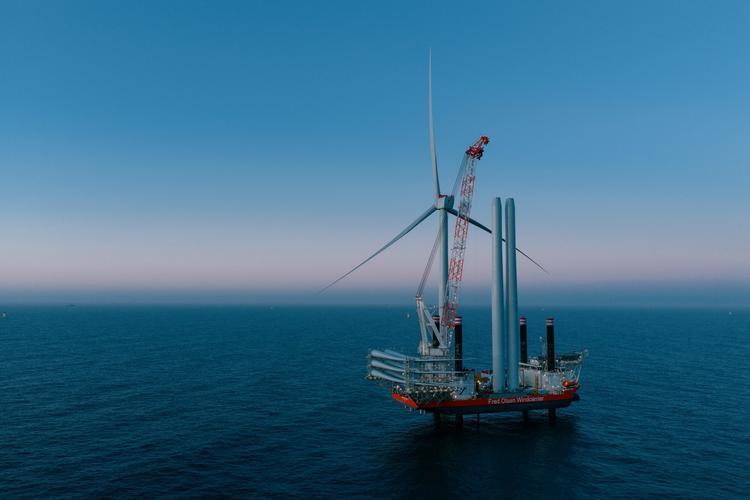
The new facilities need electricity – and a lot of it. Seven wind turbines on the factory grounds cover only a small share of requirements. The lion's share is sourced externally through so-called Power Purchase Agreements (PPAs) – long-term direct contracts with wind and solar farm operators who clearly certify the electricity as green power. One key advantage of the location: As part of the SALCOS® project, Salzgitter AG will be connected directly to TenneT’s extra-high-voltage grid, enabling it to procure large volumes of electricity from renewable sources.
And things work similarly with hydrogen. In the future, some of the hydrogen will be produced directly on-site by the new electrolysis plant, while the major share of the hydrogen will be purchased from external sources. Transportation takes place by way of the hydrogen core network or, for imports from outside Europe, additionally by ship and handled by terminals such as Wilhelmshaven or Rotterdam.
The relationship between steel and the energy transition is by no means a one-way street: Steel requires renewable energy—and, in turn, is used to build the infrastructure needed to generate that energy. Case in point is RWE’s Thor offshore project in the Danish North Sea, where 36 Siemens Gamesa GreenerTower wind towers are being deployed for the first time. Salzgitter subsidiary Ilsenburger Grobblech supplies the CO2-reduced heavy plate steel required for this project.
Up to 95 percent less CO₂
What does the conversion mean, and specifically, for the carbon footprint? “With pure natural gas, we achieve a CO₂ reduction of about 60 percent compared to the blast furnace route,” says Mecke. “With full hydrogen use, the figure stands at about 95 percent.” The key factor here is the following: Salzgitter AG is committed to full transparency with its customers and the public. The green SALCOS® products come with a transparently reported CO₂ footprint and corresponding product certification.
SALCOS® is not an isolated business decision – it is part of a societal transformation process. The EU has set a goal of achieving climate neutrality by 2050, while Germany aims to be climate neutral by the year 2045, and Lower Saxony – home to the Salzgitter Group – as early as 2040. These overarching goals set the parameters and influence the necessary infrastructure: The hydrogen core network is under construction and as things stand today, the connection for Salzgitter AG is on the agenda for late 2029.
The fact that the market is shifting is also evident on the supply side: initiating a hydrogen tender held about a year and a half ago, Salzgitter AG received offers for significantly more hydrogen than is actually required. "The market for climate-friendly hydrogen is developing – and the supply is there," says Mecke. The greatest challenge remains determining the price of green hydrogen.
Inevitable Transformation
Salzgitter AG is currently reinventing itself. When viewed in the proper context, the apparent contradiction disappears: the issue is not about more energy, but a different kind of energy. Not about doing without, but changing, switching over. “If the energy that is consumed even by a highly efficient process is to emit as little CO₂ as possible,” says Mecke, “then switching to a different energy source is the inevitable consequence.” At the plant in Salzgitter, another building block of this new era is taking shape.
Discover similar posts
Hydrogen Supply Agreement: Negotiations in terra incognita
10,000 tons of green hydrogen per year: What sounds like the conclusion of a standard supply agreement actually marked a pioneering achievement involving Salzgitter AG and its partner EWE. How to negotiate a contract without any existing templates – and what this entails for the steel industry.
Read post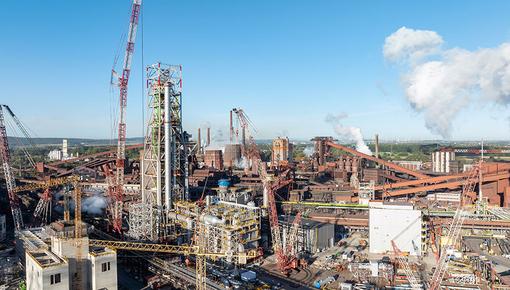
On the 1.5 °C pathway
Salzgitter AG is in the midst of the largest transformation in its history: This is how SALCOS® is driving the decarbonization of the steel industry.
Read postThe address of this article has been copied to your clipboard.