
EU trade defense: initial, cautiously positive assessment
November 05, 2026 | Reading time: 12 minutes
The quotas are in effect, and supplies are secured: Does the new safeguard measure herald a turnaround in the steel industry?
The new EU trade defense instrument for steel has been effective since July 1. The regulation is intended to protect steel production in Germany and the EU from the consequences of continuing unchecked global overcapacity, setting quotas for duty-free imports for individual countries and products. Once these quotas are exhausted, a 50 percent tariff takes effect. The regulation caps duty-free imports at 18.3 million metric tons per year, just under 50% less than before.
A preliminary assessment shows what the tool has already achieved, where gaps still need to be filled, and in which areas it is still too early to make a reliable assessment.
1. Steel imports: first positive effects
"We see that the new trade defense measures are having an effect, their mechanisms are sound and well-balanced. Imports are falling, and capacity utilization at European plants has improved," as Gunnar Groebler, CEO of Salzgitter AG, stated in his initial assessment. The European Steel Association (EUROFER) has also observed encouraging developments since the introduction of the new tariff quota. It is not that easy, however, to prove the effects with the respective data. The positive effects on steel production in Germany and Europe will actually be felt with a time lag due to the fact that companies brought their imports forward before the protective measures took effect: in the fourth quarter of 2025 in response to CBAM, and in the second quarter of 2026 due to the new tariff quota. As a result, companies have built up large inventories that now need to be reduced. The European Steel Association EUROFER expects apparent steel consumption to trend upwards by 0.1 percent in 2026 and by 2.3 percent in 2027. Even so, the association estimates that consumption is likely to be recorded at about seven million metric tons below the 2019 level. It remains difficult, however, to venture more accurate forecasts: There is simply not enough data available yet to provide a detailed understanding of how this trade defense measure is actually affecting crude steel production in the European steel industry. According to the EUROFER trade association, the fact that the European steel industry has restarted crude steel capacities of around 10 million tons in 2026 can be understood as a vote of confidence. EUROFER views the fact that European producers have made investment decisions totaling at least 3.4 billion euros as a further sign of stabilization.
2. Crude steel production: supplies are guaranteed
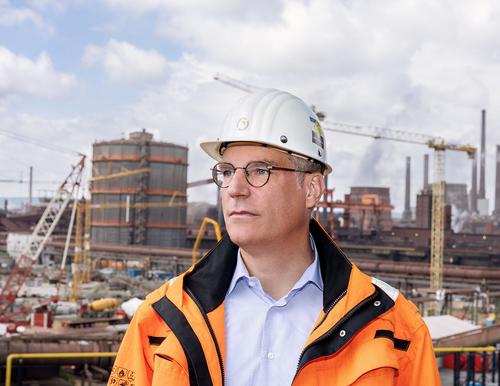
"Fears of shortages have not materialized, and there are no signs of supply bottlenecks on the market. Instead, we're seeing stronger demand for steel from Europe," says Gunnar Groebler. Europe has sufficient production capacity to meet the demand of steel customers, together with steel imports – even if demand would rise. This is because EU steel production facilities continue to operate at far too low capacity utilization. The European Steel Association EUROFER estimates that capacity utilization at European steel mills will stand at 67 percent (2026). In the case of flat steel, capacity utilization is about 69 percent, while the figure is stated at around 61 percent for long steel. In the heavy plate sector, demand stands at around 9 million metric tons, compared with a nominal capacity of 16 million metric tons. In Germany, the German Steel Association expects crude steel production to reach approximately 37 million metric tons this year, which is still below the 40-million-metric-ton threshold required for economically viable capacity utilization. Nevertheless, some of the plants that were shut down or had their output reduced are being brought back online. Since demand for steel is expected to only slightly trend upward in the medium term, no supply shortages are anticipated.
3. Moderate trends in steel prices
Intense competition among European producers, ongoing imports, and slow demand growth are limiting the scope for excessive price increases. To date, the increases have been correspondingly moderate (according to forecasts, 4 to 9 percent by the end of the year compared to the first half of the year). In any case, the trend in steel prices cannot be attributed exclusively to trade protection measures. Economic conditions, the rising costs of raw materials, energy, and CO2, as well as one-time geopolitical factors, are also impacting on steel prices in the EU.
4. First quotas have already been exhausted
Here's how the mechanism works: In the current fourth quarter of 2026, the new EU steel safeguard system reached its caps for key trading partners and product groups shortly after the start of the quarter. Turkey and China, for example used up their quotas very quickly, meaning that customs duties will be charged on any further imports.
5. Melt & Pour hardens the protective layer
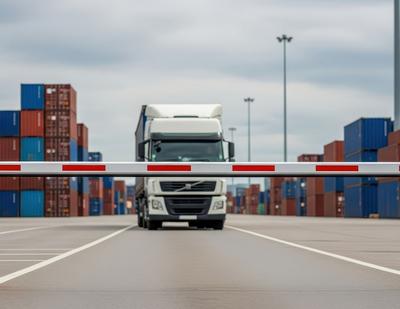
In order to prevent exporting countries from circumventing the quotas through evasion schemes (e.g., rerouting through third countries), the EU simultaneously introduced the so-called "Melt-and-Pour rule", which has been in effect since October 1. Importers must now specify and provide proof of the country in which the steel was smelted and cast. Mill test certificates, including the melt number, are regarded as standard documentation. Without this complete documentation, European customs authorities will refuse to allow steel imports. The EU aims to make the origin of steel more transparent and, in the future, to link quota consumption to the country of smelting, as required. That is why transparency is vital, and information about the actual origin of the steel must be published in a timely manner.
6. There are still gaps in the value chain
The safeguard mechanism initially applies to 28 product groups, such as flat steel, heavy plate, steel tubes, and beams. Before the safeguard mechanism took effect, steel imports accounted for between 25 and 35 percent of the total. The EU has not yet included semi-finished products such as slabs and billets, and steel-intensive downstream products – such as metal goods, machinery, and steel components – are not yet covered by the new safeguard instrument. This means that third countries can shift their import pressure for steel products either to semi-finished or finished goods. Gunnar Groebler: "As long as they can flood the market, Europe remains at risk of gradually losing its primary steel production." Consequently, in order to protect European value creation, steel-intensive downstream products must also be covered by the regulation. The instrument already provides for this expansion, and initial reviews are currently underway.
7. Transformation requires more demand
While trade protection can give European producers some breathing space, it does not fill the order books. For investments in transformation and new production methods such as SALCOS®, both are required: a reliable sales market and rules that create a level playing field. In addition to the new trade defense instrument and a watertight CO₂ border adjustment mechanism (CBAM), this includes the development of leading markets for low-carbon steel products, such as in the automotive sector or public procurement.
1. Have the EU steel tariffs been effective so far?
The new trade defense instrument is showing positive signs. It is too early to make a final assessment of its impact, especially since companies are first working to reduce their high inventory levels and, prior to the entry into force of safeguard tariffs and CBAM there were signs of front-loading.
2. Will steel become more expensive in 2027?
So far, inflation has been moderate and the relevant data do not suggest any dramatic price spikes resulting from the new protective tariffs. In any case, it is not only the new EU trade defense instrument that is impacting on price trends – rising costs for raw materials, energy, and CO₂ are also having an impact.
3. How high are the EU import tariffs on steel?
The Steel Regulation (EU) 2026/1384 replaced the previous safeguard measure on July 1, 2026. The duty-free import quotas will be reduced by about 47 percent compared to 2024, to approximately 18.3 million metric tons per year. Beyond the quotas, the tariff on imports has doubled to 50 percent.
Discover similar posts
Data Overview: Steel and Infrastructure
Steel supports our roads, railways, and wind turbines—and packs a surprising amount of weight. Here are some figures that set the standard. And a look at a microstructure that looks like snow.
Read post
Steel bridges: faster construction, longer service life
Germany's bridges are dilapidated and run down, while renovation is stalling. But solutions are at hand: Find out how steel is combining speed with cost efficiency and stability in bridge construction.
Read postThe address of this article has been copied to your clipboard.