
Steel bridges: faster construction, longer service life
March 03, 2026 | Reading time: 10 minutes
Germany's bridges are dilapidated and run down, while renovation is stalling. But solutions are at hand: Find out how steel is combining speed with cost efficiency and stability in bridge construction.
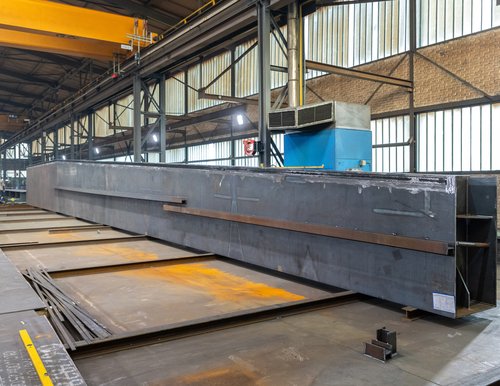
How about seven weeks instead of a year and a half? In 2024, the construction of a bridge on the B51 motorway in Münster showed just how rapidly new infrastructure can actually be put in place – provided that it is modular and made of steel. The NRW road construction authority had originally estimated a total of 18 months for the project based on conventional construction methods. So why did things go ahead so much faster? Because the bridge was built using modular construction: In this process, the elements are prefabricated in the factory, independent of any weather situations and under controlled conditions. All that remains to be done on the construction site is the actual assembly.
What sounds self-evident and without alternative at first glance has actually been the exception in Germany to date. "In Central Europe, a building culture has developed in which planning offices approach every construction with a high level of individuality," says Günther Dorrer, Chairman of the bridge construction specialist group at bauforumstahl e.V. "Standardization and modular construction methods, however, can also be used to build architecturally appealing, long-term stable bridge structures – and work far more efficiently, rapidly and cost-effectively."
Renovation backlog and further closures

A look at the figures shows that speed is urgently required. Around 4,000 highway bridges in Germany are considered to be in urgent need of renovation. A further 4,000 must follow, according to the Federal Ministry of Transport. The Transport & Environment organization paints an even more drastic picture: a total of 16,000 bridges in federal ownership are dilapidated. The renovation backlog for the replacement of end of life, run down bridges is also hugely underestimated and could amount to up to 100 billion euros at federal, state and municipal levels.
The Bundesrechnungshof also stated clearly in the spring of 2025: Autobahn GmbH is clearly behind schedule with the implementation of the bridge modernization program. By the end of 2024, only 40 percent of the planned modernizations had been completed. Month-long closures paralyze traffic in entire cities or regions, driving up costs, while putting strains on the economy and tourism. One example: The ADAC estimates that the Friedrich-Ebert Bridge in Bonn alone would result in 170 million euros in economic damage per year if it were closed.
When money alone is not enough
Policymakers have recognized the pressing need for action. In order to clear the investment backlog, the Bundestag and Bundesrat decided in March 2025 to create a Special Fund for Infrastructure and Climate Neutrality with additional investments weighing in at 500 billion euros. A total of 169 billion euros are to be invested in the renovation of damaged roads, overloaded railroads, dilapidated bridges and waterways in need of repair by 2029 alone – which is around 25 percent more than in previous years. "It is an important first step that these funds are now being made available," says Dorrer. "But money alone will not solve our transport infrastructure problems."
Awarding and allocations, planning and official processes are too slow. Sometimes the procedure for the planning approval alone takes over a decade. Above all, environmental assessments, public participation and a lack of personnel capacities cost time and make such major projects incalculable.
This situation places heavy burdens on industry. This is because the industrial arena needs planning security for extensive infrastructure projects. Reacting to an "accumulation of tenders" in the short term? This is "simply utopian" for Dorrer.
Built for other loads: Bridges from the 1960s
Not exactly good conditions for tackling the overdue renovation of many bridges in the short term. Most of today's problematic buildings date from the 1960s and 1970s. “They were designed for completely different traffic loads," says Dorrer. At that time, semi-trailers weighed a maximum of 24 tons, later 38 tons. Today, the figure extends up to 44 tons – with traffic volumes multiplying at the same time.
What's more: For decades, the maintenance of bridges was neglected in the western federal states. The investment and renovation backlog was only recognized when the first closures became unavoidable.
Steel in bridge construction: Durable, maintainable, sustainable
This makes it all the more important to rely on constructions that are durable, maintainable and sustainable when renovating and building new buildings. The key prerequisite for this: the choice of the right material. Steel is at work in just about every bridge – regardless of which building material dominates. Whether as a reinforcement in reinforced concrete, as prestressing steel in prestressed concrete or as the actual main structure: Steel is the load-bearing element. While the material of pure steel bridges is exposed and can be inspected at any time, it remains hidden inside concrete and prestressed concrete bridges, making it more difficult to analyze the relevant condition.
In the case of steel bridges, any damage is readily visible and accessible. "The structures can be reinforced or renovated at an early stage," as Dorrer emphasizes, meaning that individual components can be replaced and the corrosion protection renewed. Another key advantage: "Steel can be analyzed down to the most minute chemical element and mechanical properties – better than any other material." Every single sheet is documented from production all the way through to installation. In future, this precision will become even more important when digital twins and AI-based monitoring for maintenance and servicing become standard.
Steel bridges stand for decades of service life. Hot-dip galvanized constructions are even protected against corrosion for an impressive 100 years, while historical examples document even longer periods of use. An additional plus point here: At the end of its service life, steel can be recycled almost indefinitely without any loss of quality. The eco-balance improves even further if steel is produced by a low CO2 route, as Salzgitter AG is offering under the SALCOS® brand. "Unfortunately, sustainability is not yet an issue in tenders here in Germany," as Dorrer relates. This is different in Austria and Scandinavia, where the carbon footprint and sustainability criteria are already relevant in order to maintain the chance of being awarded a contract. "This will certainly also be the case in Germany in the future."
Related topics
Built to last: Pioneering bridges made of steel
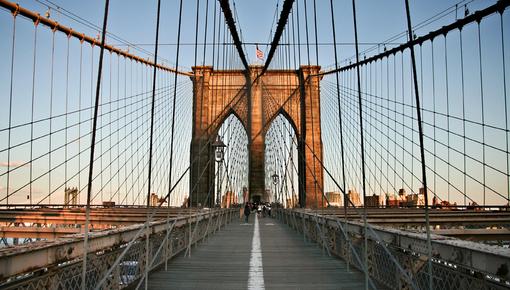
The oldest steel bridges in the world were built for horse-drawn carriages, yet they are so sturdy that they are still suitable for modern road and rail traffic.
Read post
Major renovations: Steel countering Germany's standstill
A total of 500 billion euros for a stable future: How we are leveraging the government special fund to upgrade our infrastructure and operate in a more climate-friendly way. And what role steel is playing in all this.
Read post
Initiative Construction
To promote steel infrastructure, the Initiative Construction brings together expertise in steel and technology for sustainable construction.
The address of this article has been copied to your clipboard.