
WIND POWER: NATIONWIDE JOB ENGINE FROM NORTH TO SOUTH
June 04, 2026 | Reading time: 14 minutes
Study shows that offshore wind power is a key economic factor for the entire country.
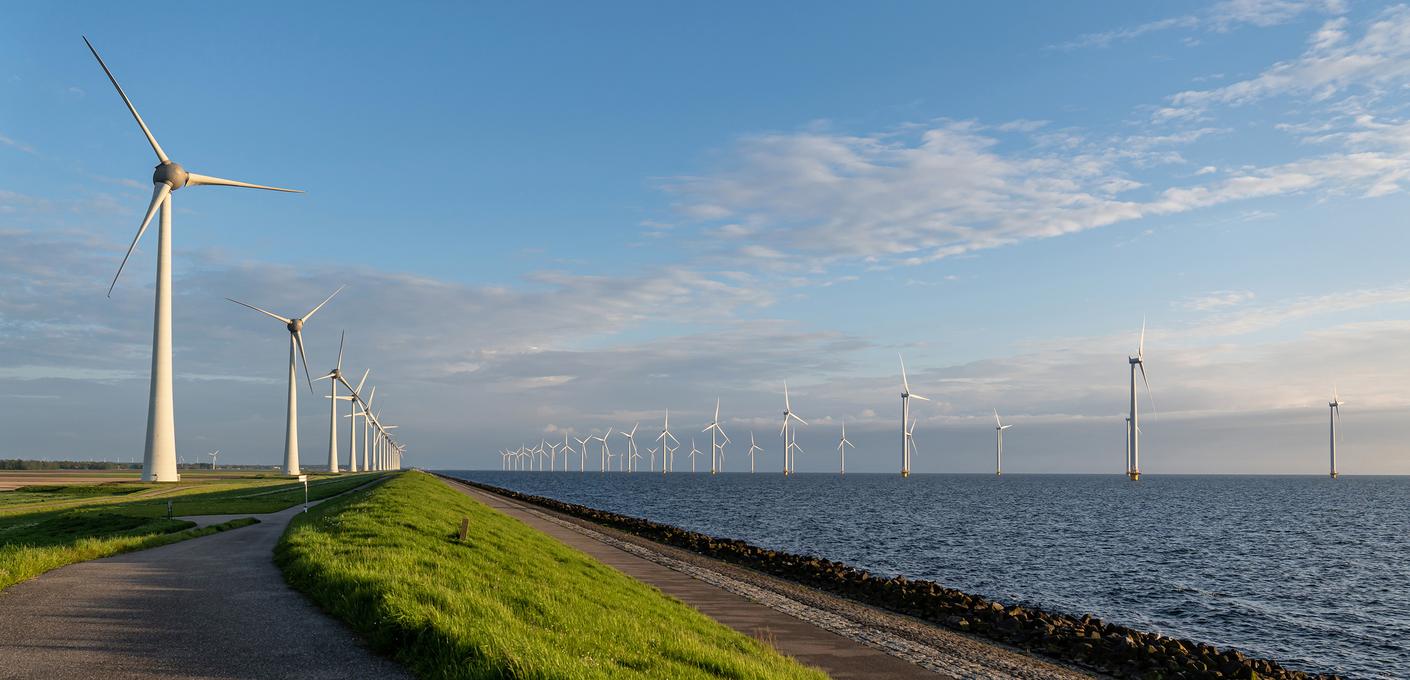
Offshore wind turbines are only of interest to German Federal States situated on the coasts. This sentence would seem to hold true at first glance. In truth, however, this is more than short-sighted given that offshore wind power is a nationwide industrial project that generates sales deep into the south of Germany, while securing jobs across the country. This is the conclusion of the study "Value creation of offshore wind energy in Germany", just conducted by wind:research on behalf of the Bundesverband Windenergie Offshore e.V. (BWO).
Offshore wind power: Central economic factor and job engine
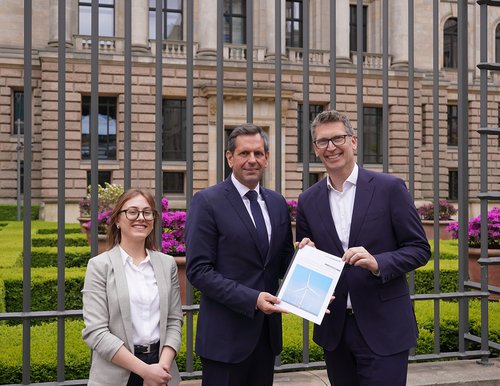
According to the study, offshore wind turbines generated 26.1 billion kilowatt hours of electricity in 2025. The value creation of offshore wind energy in Germany varies from region to region and follows a clear functional division of labor along the value chain: Companies from northern Germany dominate in product development, planning and operation. A large part of the value creation, however, from steel production for towers to software components, takes place in the industrial centers of many other federal states. This secures thousands of skilled jobs in regions such as North Rhine-Westphalia, Saarland, Baden-Württemberg and Saxony-Anhalt. The frontrunner Baden-Württemberg – far away from the North and Baltic Seas – is the leader in the value-added ranking, recording turnover of five billion euros.
In total, some 900 companies from many regions keep the wind turbines at sea running. In the year 2025 they generated a sales volume weighing in at 14.6 billion euros, securing more than 31,500 full-time jobs – and consequently future-oriented employment. If the expansion targets of the Offshore Wind Energy Act are achieved, these figures could rise to over 50 billion euros in gross value added and 120,000 employees up to the year 2045. In this way, offshore wind energy is securing high industrial value creation and jobs in Germany. The offshore sector has the potential to develop into a rapidly growing industry. At a time when many industrial jobs are being cut or moved overseas, this is an encouraging sign.
Salzgitter AG is also positioning itself as a relevant player in the value chain: the group subsidiary, Ilsenburger Grobblech GmbH, supplies heavy plate for offshore wind towers – also in CO2-reduced versions. The Group is involved as one of the supporters of the study, along with various other renowned companies.
What does offshore wind power actually mean?
The term offshore means "off the coast". Offshore wind energy refers to the generation of electricity from wind turbines at sea. The key advantage: The winds at sea are stronger and more constant than on land (onshore). As a result, offshore turbines can generate on average twice as much electricity than comparable wind turbines on land. Their disadvantage: The effort required to erect them is significantly greater and they are more expensive to build, while also being more difficult to reach and maintain. Offshore wind turbines are therefore erected in the form of large wind farms or wind farm clusters. Such systems can comprise over a hundred wind turbines. In shallower waters, the wind turbines are firmly anchored to the seabed or used as floating platforms in deep waters. The electricity generated reaches land via submarine cables. The majority of offshore wind farms in Germany are located in the North Sea, while there are also some facilities in the Baltic Sea. In Germany, offshore wind energy is mainly generated outside of the 12 nautical mile zone. Germany ranks as one of the countries with the highest installed offshore wind turbine capacity – trailing behind China as the front runner.

Headwinds for the domestic offshore value chain
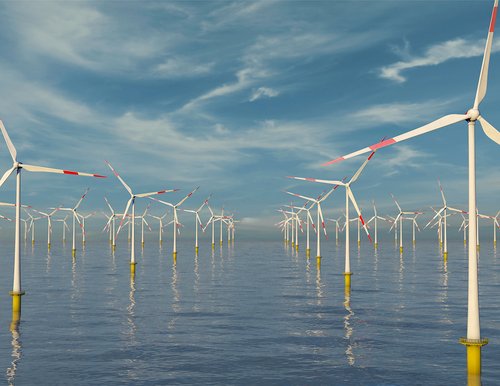
Offshore wind energy — it’s a nationwide success story. But the study warns that the delays in expansion over the past few years have caused Germany to fall behind more dynamic markets at times. This has put pressure not only on industrial value creation but also on capacities throughout the value chain. The industry is facing significant headwinds. Meanwhile, expansion is stalling. Companies want more planning security for their expansion courses, while at the same time, China is investing heavily in wind power and stepping up the competitive pressure on wind power suppliers in this country. Imports of central offshore components are on the rise, and sometimes at very low prices, which is putting additional pressure on European manufacturers. In particular, state-subsidized overcapacity outside Europe can lead to distortions of competition and weaken the economic foundation of domestic industry.
Auctions for wind farms on the North Sea coast have recently failed to attract any bidders. The criticism: Feeding additional electricity into the grid earns so little that the investments no longer pay off. The study sees the insolvency of individual market participants and a declining degree of specialization as further indications that the industry is under pressure to take action. According to the German Wind Offshore Association, the expansion target for offshore wind energy in Germany of 30 gigawatts of installed capacity by 2030 will be missed by more than a third. Especially now that, according to reports from NDR and "Süddeutsche Zeitung", the French energy company TotalEnergies intends to withdraw from wind farms in the North and Baltic Seas. TotalEnergies wants to return already reserved areas, the media reported, citing an internal company position paper. This would incur far-reaching repercussions for the expansion of offshore wind power and serious consequences for the energy transition. The wind turbines planned there were intended to supply a total of 7.5 gigawatts of electricity in future. The company cites delays in grid expansion and changes in the economic environment as the reason for the decision. According to Süddeutsche Zeitung, the Federal Ministry of Economics has "no reason to doubt the realization" as things stand in mid-May.
It is clear, however, that the industry urgently needs more tailwind. According to the BWO study, bureaucratic obstacles must be removed, planning and approval procedures accelerated and wind farm and grid expansion better synchronized. The wind industry is also hoping for targeted risk sharing between the state and investors: Two-sided Contracts for Difference (CfD) set a fixed price per megawatt hour of electricity generated in the tendering process. If the market price is lower, the state pays the difference to the operator; if it is higher, the state receives the additional revenue from the operator. Great Britain has already gained good experience with this system. Above all, however, industrial manufacturing and supply chain capacities in Germany and Europe must be consistently safeguarded.
Offshore wind power in Germany makes us more independent
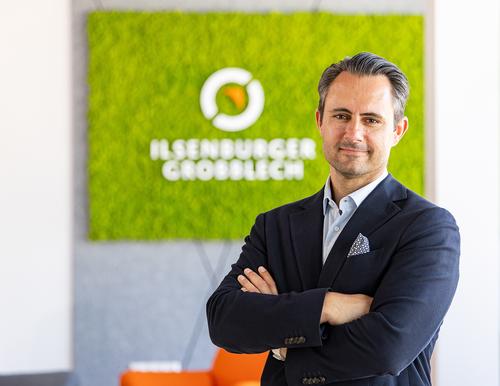
"We need offshore wind power, not only as a key economic factor and job engine," says Thorsten Gintaut, Managing Director of Ilsenburg Grobblech GmbH. "It is also a central component of the energy transition and is urgently required so that we can position ourselves more confidently in the energy sector in the future." Offshore wind energy increases Germany's resilience and supply security. It is worrying if domestic value creation in this area continues to decline. Without industrial policy control and steering, Germany threatens to become a mere assembly location for foreign products. In the long term, there is a risk that a large share of the investments associated with offshore wind will flow abroad instead of securing employment and prosperity in Germany. In addition, greater wind energy capacity is needed so that green electricity for the production of green hydrogen is available. This is urgently required for low-CO2 steel production, for example.
Future technology: Securing expertise for wind energy

According to the Wind Energy at Sea Act the installed wind power capacity is to increase from just under 10 GW (end of 2025) to at least 30 GW by 2030 and to a minimum of 70 GW by 2045. The decisive factor, however, is not only that construction is taking place, but also who is building and who is supplying, explains Jörn Klare, expert for foreign trade policy, markets and statistics at Salzgitter AG. "Against this backdrop, trade policy support is also becoming increasingly important and can help to limit distortions of competition and secure domestic value creation." Otherwise, orders for components such as heavy plate would increasingly be awarded to Asia. According to Klare, without targeted industrial policy measures, Germany could lose its technological sovereignty in this area as well as losing expertise in a vital future technology.
Salzgitter AG: Wind power for steel
Here is a genuine circular value creation story: The offshore wind industry needs steel for the towers and foundations of its turbines on the high seas – and Salzgitter AG supplies precisely this. Last year, for example, the company supplied Siemens Gamesa with steel for 36 wind towers for the "Thor" offshore wind farm. At the same time, wind – from onshore and offshore sources – plays an important role for SALCOS®, the company's transformation program, and for low-carbon steel production. As Salzgitter AG has set itself the goal of sourcing only green electricity by 2030, the Group has concluded long-term direct supply contracts – so-called Power Purchase Agreements (PPAs) – with renewable energy plants in addition to seven of its own wind turbines on the plant site. In this context for example, Salzgitter AG has also agreed a direct green electricity supply contract with Nordlicht, Germany's largest offshore wind farm. As from its planned completion in 2028, the company will purchase around 300 gigawatt hours (75 megawatts connected load) annually from the "Nordlicht 1" offshore wind farm for a total of 15 years. The various partners enable the Group to spread the risk and enhance supply security.
Discover similar posts
![[Translate to Englisch:]](/fileadmin/stil-magazine/_processed_/c/7/csm_Header_Rohrinfrastruktur_900x510_a66f68b4b8.webp "[Translate to Englisch:]")
The invisible grid of the energy transition
A significant share of Germany's ongoing industrial transformation is taking place underground: The conversion, expansion and new construction of the pipeline networks for thermal energy, water and hydrogen is the largest and probably most diffuse construction site in the entire country. A Herculean task in which steel pipes are putting down the technological foundation.
Read post
Setting the course to the future in Lower Saxony
Why Benedikt Hüppe, Managing Director of the Unternehmerverbände Niedersachsen (UVN) (Lower Saxony Business Associations), is strongly convinced of the adaptability, flexibility and sustainable future viability of Lower Saxony as a business location. And what he is demanding from policy makers.
Read interviewThe address of this article has been copied to your clipboard.